
⚠️ Medical Disclaimer This article is for informational purposes only and does not constitute medical or professional care advice. Consult a qualified healthcare professional or licensed home care agency before making any care decisions. |
India carries the world’s second-largest diabetes burden — the Indian Council of Medical Research (ICMR) estimated 101 million people living with diabetes as of 2023, with Karnataka contributing approximately 11.8% of that caseload. For families managing a diabetic patient at home, the gap between adequate and inadequate monitoring is measured in complications — a missed insulin dose, an undetected foot sore, or a nocturnal hypoglycaemic episode can escalate within hours. Home nursing services for diabetic patients address that gap by placing trained, INC-registered nurses directly in the patient’s living environment, providing clinical oversight that family members — however attentive — are not equipped to replace.
This article explains what professional diabetes home care involves, which patients benefit most, what families should expect from a trained nurse, and how to evaluate a provider.
Daily Challenges Faced by Diabetic Patients
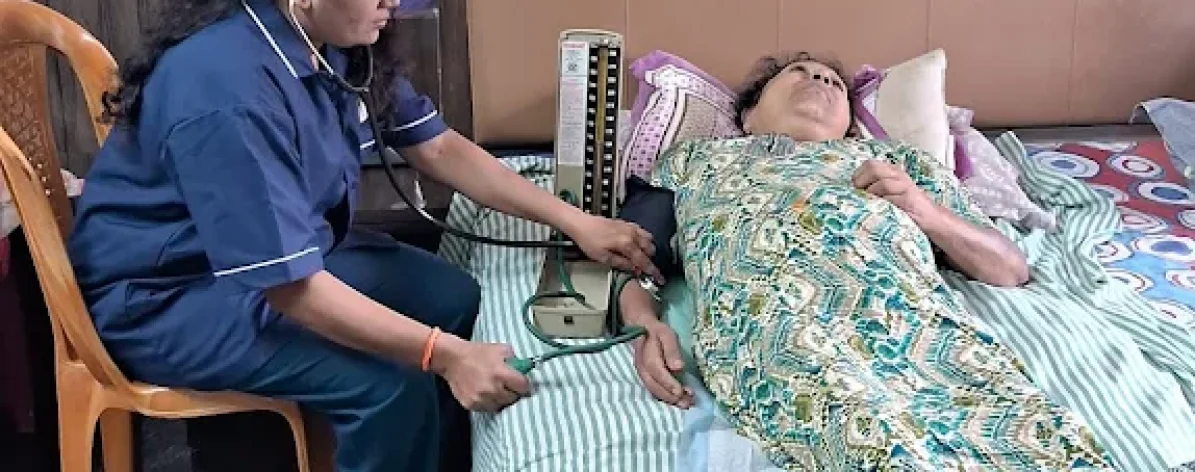
Diabetes management at home is not a single task — it is a continuous cycle of monitoring, adjustment, and prevention. Most complications arise not from lack of awareness, but from the practical difficulty of maintaining clinical discipline across every waking hour.
1. Blood Sugar Instability
Glycaemic variability — wide swings between high and low blood glucose — is more damaging to organs than stable elevated glucose. Patients on insulin or sulphonylureas face hypoglycaemia risk after meals, during sleep, or after unplanned physical activity. Without timed checks and a documented log, patterns that signal medication adjustment go undetected for days.
2. Medication Complexity
A typical Type 2 diabetic patient above 60 years takes 4–7 medications daily — metformin, a sulphonylurea or DPP-4 inhibitor, an antihypertensive, a statin, and sometimes a proton pump inhibitor for gastric protection. Dose timings relative to meals vary by drug. Errors in sequence or timing directly affect glycaemic control and organ function.
3. Dietary Discipline
Carbohydrate counting and glycaemic index awareness require consistent meal planning. In Indian households where meals are family-style and festival-season exceptions are common, maintaining carbohydrate discipline without a structured support system is challenging. Portion inconsistency produces erratic postprandial glucose peaks that are difficult to manage with fixed medication doses.
4. Mobility Decline in Elderly Patients
Elderly diabetic care at home is complicated by the interplay between diabetes and age-related mobility loss. Peripheral neuropathy reduces sensation in the feet — meaning a pressure sore or friction wound may develop without the patient feeling it. Sarcopenia (age-related muscle loss) reduces the patient’s ability to maintain safe walking gait, increasing fall risk.
5. Psychological and Compliance Fatigue
Diabetes is a lifelong diagnosis. Research published in Diabetes Care (2021) shows that 35–40% of diabetic patients report significant diabetes distress — emotional exhaustion from the demands of constant self-management. This fatigue directly impacts medication adherence, dietary compliance, and self-monitoring frequency, which is why external clinical support produces measurably better outcomes than self-management alone.
Why Professional Home Care Is Essential for Diabetes Management
Skilled nursing care at home for diabetic patients delivers four outcomes that untrained caregiving cannot: clinical continuity, early complication detection, physician-connected reporting, and emergency preparedness. A trained nurse does not replace the treating physician — they extend the physician’s clinical reach into the patient’s daily environment.
3 Clinical Outcomes Supported by Home Nursing
- Reduced 30-day readmission: Patients discharged after a diabetic complication who receive structured home nursing show lower readmission rates — a metric tracked under NABH quality standards for Indian hospitals.
- HbA1c improvement: Consistent monitoring and medication adherence under supervised home care correlates with better long-term glycaemic control, measured by the quarterly HbA1c test.
- Faster wound resolution: Diabetic foot ulcers graded Wagner 1–2 managed at home by a trained nurse with daily dressing protocols show resolution timelines comparable to outpatient clinic management, according to evidence from the Journal of Wound Care (2022).
Key Services Provided by Home Nurses for Diabetic Patients
A trained home nurse deployed by WeCare Home Nursing Services provides the following clinical services as part of a structured diabetes care plan:
1. Blood Glucose Monitoring
Blood sugar monitoring at home is conducted using a calibrated glucometer at prescribed intervals — fasting, pre-meal, postprandial, and bedtime checks per the treating physician’s protocol. Readings are logged in a physical or app-based chart shared with the physician at regular intervals, enabling data-driven medication adjustments.
2. Insulin Administration Support
GNM and BSc-qualified nurses administer subcutaneous insulin injections using the correct site rotation (abdomen, thigh, upper arm) to prevent lipodystrophy — a common complication of repeated injection at the same site. They also monitor for injection site reactions and confirm dose accuracy against the prescription.
3. Medication Management
The nurse maintains a daily medication administration record (MAR), verifies dosages, monitors for drug interactions or side effects (particularly nausea, hypoglycaemia, or renal-function-related dosing changes), and flags concerns to the physician. For patients with impaired cognition or vision, this ensures no dose is missed or doubled.
4. Vital Sign Monitoring
Diabetes frequently co-exists with hypertension and chronic kidney disease. Regular BP, SpO2, weight, and temperature readings, recorded and trended, allow early detection of hypertensive episodes, fluid retention, or signs of infection — all of which affect glycaemic control.
5. Patient and Family Education
A structured part of every home nursing visit is caregiver education — teaching family members to recognise hypoglycaemia symptoms, understand the patient’s medication schedule, prepare appropriate meals, and safely assist with daily movement. This builds a secondary support layer around the patient’s clinical care.
Wound Care and Diabetic Foot Care at Home
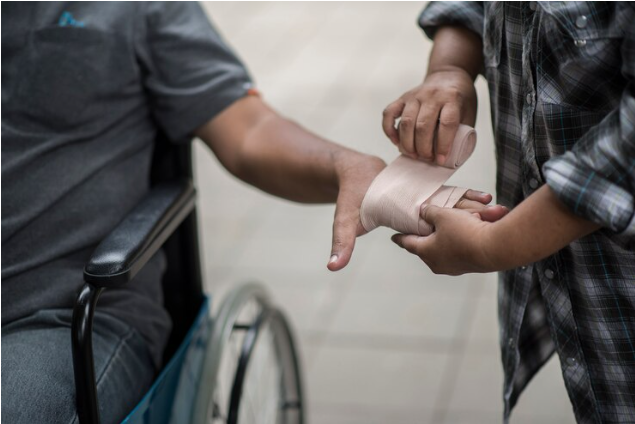
Diabetic foot ulcers account for nearly 85% of all non-traumatic lower limb amputations in India, per data from the Diabetic Foot Society of India (DFSI). The majority of these amputations are preventable with early wound detection and consistent nursing care. Wound care at home nursing for diabetic patients follows a structured protocol distinct from routine post-surgical wound management.
4 Steps in Diabetic Foot Wound Assessment
- Visual inspection of all skin surfaces on both feet — between toes, heel, ball of foot — using a mirror if necessary.
- Grading using the Wagner Diabetic Foot Ulcer Classification (Grade 0–5) to determine severity and escalation threshold.
- Daily sterile dressing change with appropriate wound care products (alginate, hydrogel, foam dressing per wound type).
- Infection monitoring: any sign of purulent discharge, cellulitis extending beyond wound margins, fever, or foul odour triggers immediate physician alert and possible hospital referral.
Patients with peripheral neuropathy require daily foot inspection even in the absence of visible wounds — neuropathic ulcers can develop over 24–48 hours from friction or pressure without the patient reporting pain.
Nutritional Guidance and Lifestyle Support

Diet accounts for approximately 40–60% of glycaemic control in Type 2 diabetes, per ICMR dietary guidelines. Home nurses trained in diabetes nutrition provide practical guidance within the patient’s actual kitchen environment — assessing meal patterns, helping plan carbohydrate distribution across three main meals and two snacks, and flagging high-glycaemic-index foods common in Indian cooking (white rice, maida-based bread, jaggery, fruit juices).
5 Dietary Principles for Diabetic Patients at Home
- Distribute carbohydrate intake evenly across meals rather than concentrated at dinner to reduce postprandial glucose spikes.
- Replace refined grain staples with whole-grain alternatives — red rice, jowar roti, ragi mudde — for patients who tolerate them.
- Maintain hydration of 8–10 glasses of water daily — dehydration worsens insulin resistance and impairs kidney filtration in diabetic patients.
- Include 20–30 minutes of low-impact physical activity daily as cleared by the physician — seated stretching or short corridor walks reduce insulin resistance without hypoglycaemia risk.
- Limit added sugar, fruit juices, and sweetened dairy products — even ‘healthy’ sources of concentrated sugar produce rapid glycaemic excursions in diabetic patients.
Professional Home Nurse vs Untrained Caregiver: Side-by-Side
Factor | Professional Home Nurse | Untrained Family Caregiver |
Blood glucose monitoring | Daily logged readings, INC-certified | Inconsistent, no clinical baseline |
Insulin administration | Correct dose/site/timing per protocol | Risk of dosing error or lipodystrophy |
Wound assessment | Graded using Wagner scale, documented | May miss early signs of infection |
Emergency response | Basic life support trained, escalation | Limited — depends on individual |
Medication adherence tracking | Written log, physician reporting | Often memory-based, undocumented |
Family stress reduction | Structured handover + family training | Full burden on family members |
The distinction matters most in two scenarios: insulin management and wound care. Both require clinical training that cannot be replicated by general caregiving. An untrained caregiver providing emotional support and daily living assistance is valuable — but cannot substitute for a nurse in clinical decision-making.
How Professional Home Care Prevents Diabetes Complications
| Complication | Warning Signs | Home Nursing Action |
| Diabetic foot ulcer | Redness, warmth, open wound | Wagner scale grading, dressing, physician alert |
| Hypoglycaemia | Tremors, confusion, sweating | 15g fast-acting carb, recheck in 15 min |
| Hyperglycaemic crisis (DKA) | Fruity breath, rapid breathing, vomiting | Immediate emergency referral to hospital |
| Peripheral neuropathy pain | Burning, numbness in feet/legs | Pain assessment, physio referral, footwear check |
| UTI / skin infection | Fever, burning urination, skin redness | Culture swab, antibiotic follow-up per physician |
| Hypertension spike | BP >160/100, headache, blurred vision | BP log, physician notification, medication review |
Post-hospitalization diabetes care is the highest-risk window — the 30 days after discharge when medication changes, reduced physical activity, and dietary disruption converge. A home nurse provides the structured monitoring bridge between hospital discharge and the next physician outpatient appointment, typically 2–4 weeks later.
When Should You Consider Home Nursing for a Diabetic Patient?
Families frequently delay hiring a home nurse until a crisis occurs. The following situations warrant arranging professional home nursing care proactively:
- Post-hospital discharge: Particularly after diabetic ketoacidosis (DKA), hyperosmolar hyperglycaemic state (HHS), or a diabetes-related infection requiring IV antibiotics.
- Elderly patients (65+): Who live alone or with a single family caregiver and have co-morbidities such as hypertension, CKD, or heart failure alongside diabetes.
- Active diabetic foot ulcer: Any open wound or non-healing skin break on the feet requires daily supervised wound care — not periodic clinic visits.
- New insulin regimen: Patients transitioning from oral medication to insulin injections benefit from supervised administration until technique is established and dose titration is stable.
- Cognitive decline: Diabetic patients with early dementia or delirium risk cannot reliably self-administer medications or recognise hypoglycaemia symptoms.
For a detailed assessment of home nursing options after hospitalisation, see post-hospitalization nursing at home and elderly home care services in Bangalore on the WeCare24 website.
WeCare24: Professional Diabetes Home Care in Bangalore and Mysore
WeCare Home Nursing Services deploys INC-registered nurses and trained caregivers for diabetic patients across Bangalore and Mysore. Each care plan is built around the treating physician’s discharge instructions, covering blood glucose monitoring schedules, wound care protocols, medication administration, and family training.
Care coordinators are available to assess the patient’s requirements and match the appropriate nurse qualification level — ANM for supportive monitoring, GNM for medication and wound care, BSc Nursing for complex cases with IV medications or active complications. For professional home nursing care near me, WeCare24’s response time is typically 4–8 hours from initial inquiry for non-emergency placements in Bangalore and Mysore.
Home healthcare services from WeCare24 also include companion caregiving for elderly diabetic patients who need daily living assistance alongside clinical monitoring. Families managing a parent or spouse with long-term diabetes often find that a structured care plan — combining a nurse visit with daily caregiver support — reduces both patient risk and family stress substantially.
Making the Decision: A 5-Point Readiness Check
Before arranging home nursing for a diabetic patient, confirm the following with the treating physician:
- Is the patient’s current medication regimen stable, or are adjustments expected in the next 2–4 weeks?
- Does the patient require insulin injections, IV medications, or wound dressing that a family member is not trained to perform?
- Is there an active complication (foot ulcer, hypertensive episode, renal function change) requiring daily clinical monitoring?
- Is the patient aged 65 or above with limited mobility, cognitive decline, or a recent fall history?
- Is the next physician outpatient appointment more than 7 days away?
If the answer to two or more of these questions is yes, professional home nursing is the clinically appropriate and practically necessary choice. For most Indian families, the barrier is not cost — home nursing at ₹900–₹2,000 per 12-hour shift is a fraction of a re-hospitalisation — but awareness of what home nurses can actually do.
Frequently Asked Questions
A trained home nurse for diabetic patients covers blood glucose monitoring, insulin administration, medication management, wound and diabetic foot assessment, vital sign monitoring, and family education. The nurse maintains a clinical log and reports changes in the patient’s condition to the treating physician promptly.
For elderly diabetic patients, blood glucose should be measured at minimum twice daily — fasting and two hours post-meal. Patients on insulin or with unstable glycaemic control may need pre-meal and bedtime checks as well, per the treating physician’s protocol.
Under IRDAI’s domiciliary hospitalisation provisions, home nursing costs may be covered if a physician certifies that the patient requires clinical care at home and cannot be hospitalised. Verify your insurer’s domiciliary care clause and coverage limit before arranging services.
A trained nurse (ANM, GNM, or BSc — INC-registered) can administer insulin, interpret glucose readings, grade wound severity using the Wagner scale, and manage emergencies. An untrained caregiver provides non-clinical support such as bathing, feeding, and companionship, but cannot perform clinical interventions.
Hire a home nurse when the patient is discharged after a diabetes-related hospitalisation, requires daily insulin injections, has an active wound or diabetic foot ulcer, is elderly with mobility limitations, or has recently developed a serious co-morbidity. Do not wait for a crisis — the window immediately post-discharge is the highest-risk period.
Need professional diabetes home care in Bangalore or Mysore? WeCare24 provides trained, INC-registered nurses and caregivers for diabetic patients across Bangalore and Mysore. Speak to a care coordinator about a personalised diabetes care plan. Visit wecare24.co to schedule a consultation. |
About the Author L K Monu Borkala is a digital marketing strategist with 20+ years of experience producing informational content across healthcare services, home care, and professional services verticals. This article is produced for informational purposes only. Consult a licensed healthcare provider or registered home care agency before making decisions about home nursing or care arrangements. LinkedIn: linkedin.com/in/monuborkala |
