
Published:
Dialysis complications symptoms that families must watch for include severe fatigue, breathing difficulty, fever with chills, redness or swelling at the access site, dizziness, chest pain, persistent nausea, muscle cramps, confusion, and unusual bleeding. Emergency signs like chest pain, sudden confusion, or high fever require immediate hospital care.
Dialysis keeps patients with kidney failure alive by filtering waste and excess fluid that the kidneys can no longer remove. But the process places stress on the body, and complications after dialysis can develop during a session, within hours of returning home, or over days between treatments. For families in Mangalore, Bangalore, and across Karnataka managing a dialysis patient’s daily care, recognising warning signs of dialysis complications early is the difference between a timely response and a preventable emergency. The National Kidney Foundation identifies infection, cardiovascular events, and vascular access failure as the leading causes of hospitalisation among dialysis patients.
Understanding Dialysis and Its Possible Complications
Dialysis performs the blood-filtering function that damaged kidneys cannot. Two types are used in India:
- Haemodialysis: blood is pumped through an external machine that filters waste and returns cleaned blood to the body, typically 3 times per week at a dialysis centre. Access is through an AV (arteriovenous) fistula, AV graft, or central venous catheter.
- Peritoneal dialysis: a cleansing fluid is introduced into the abdominal cavity through a surgically placed catheter. The peritoneum (abdominal lining) acts as the filter. This can be performed at home, often overnight.
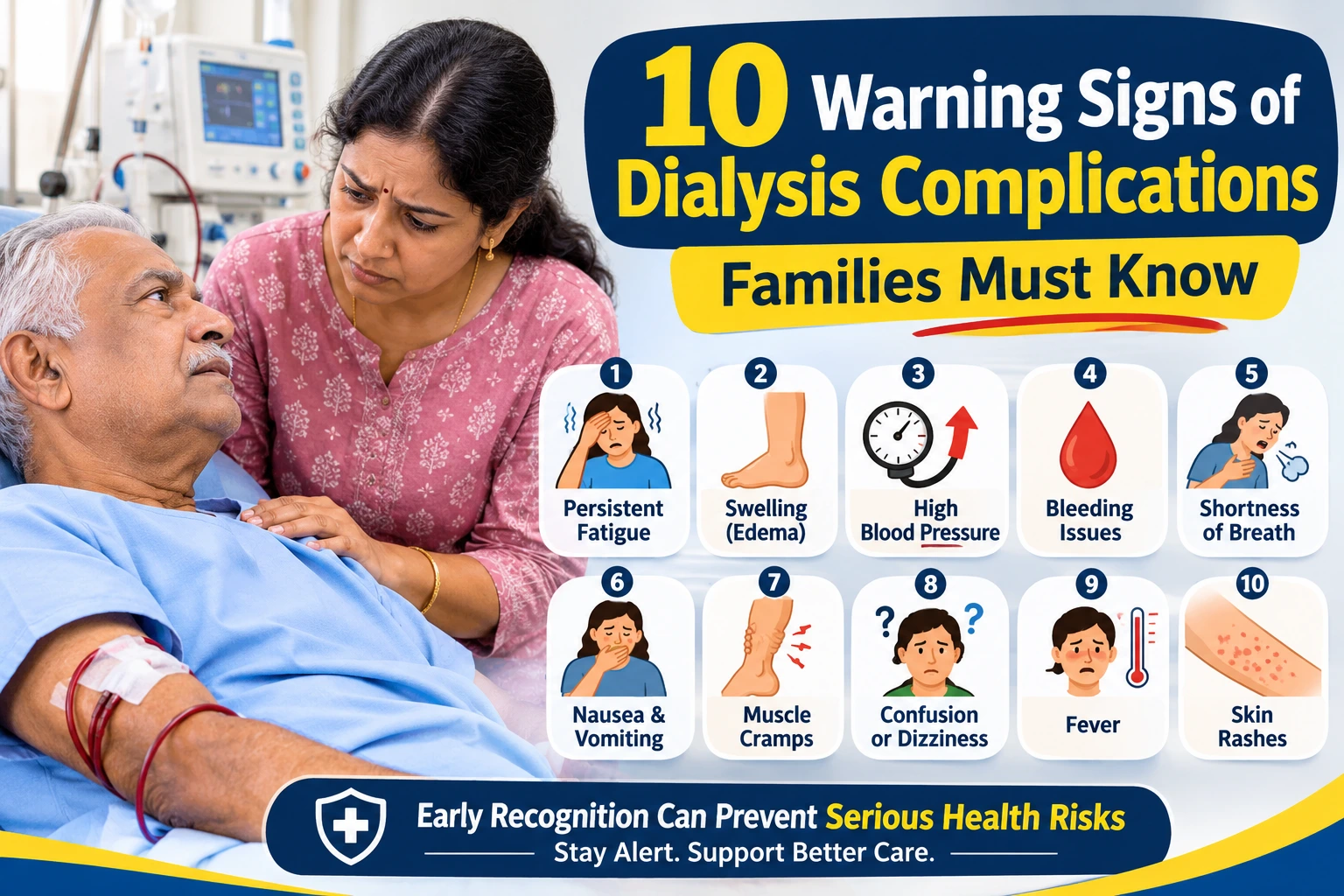
Complications arise from fluid shifts during treatment, infection at access sites, electrolyte imbalances, and the cardiovascular strain of repeated blood filtering. Not every side effect is an emergency, but some dialysis side effects require urgent medical attention. The 10 warning signs below help families distinguish between symptoms that need monitoring and those that need immediate action.
10 Warning Signs of Dialysis Complications to Watch For
1. Severe Fatigue and Unusual Weakness
Some tiredness after a haemodialysis session is normal as the body adjusts to fluid removal. But persistent exhaustion that lasts more than a day, weakness that prevents the patient from standing or walking, or fatigue that worsens over successive sessions may indicate anaemia, inadequate dialysis, or an underlying infection. Report persistent fatigue to the dialysis team at the next session. If the patient is too weak to eat, drink, or respond normally, seek medical help the same day.
2. Difficulty Breathing or Shortness of Breath
Breathing difficulty in a dialysis patient can signal fluid overload (too much fluid between sessions), heart failure, or pulmonary complications. Mild breathlessness when lying flat may improve by sitting upright and should be reported to the doctor. Sudden, severe shortness of breath, especially with chest tightness, is an emergency. Call for medical help immediately.
3. Fever and Chills
Fever above 38°C (100.4°F) with shaking chills in a dialysis patient is one of the clearest signs of infection in dialysis patients. The access site (fistula, graft, or catheter) is a direct entry point for bacteria into the bloodstream. Access-related bloodstream infections can progress to sepsis within hours. Do not wait for the next dialysis appointment. Contact the treating doctor or go to the hospital the same day.
4. Redness, Swelling, or Pain Around the Dialysis Access
The AV fistula, graft, or catheter site should be inspected daily. Watch for increasing redness, warmth, swelling, tenderness, or any discharge (pus or fluid) at or around the access point. These are warning signs of a localised infection that can spread if untreated. Report changes to the dialysis team within 24 hours. If the area becomes hot, painful, and swollen with fever, seek medical attention the same day.
5. Dizziness or Fainting
Blood pressure drops during haemodialysis when fluid is removed faster than the body can compensate. This causes dizziness, lightheadedness, or fainting (syncope). Elderly patients face a higher risk of falls during or after episodes of low blood pressure. If dizziness passes quickly after the session and does not recur, mention it at the next appointment. If the patient faints, cannot stand, or has repeated episodes, contact the doctor immediately.
6. Chest Pain or Irregular Heartbeat
Chest pain, palpitations, or an irregular heartbeat during or after dialysis may indicate a cardiac event, electrolyte imbalance (especially potassium), or angina. Dialysis patients are at higher cardiovascular risk than the general population. Any chest pain should be treated as an emergency. Call for medical transport to the hospital. Do not wait to see if the pain resolves.
7. Persistent Nausea and Vomiting
Occasional nausea during dialysis can result from blood pressure changes or the rapid removal of waste products. Persistent nausea that continues for hours after the session, repeated vomiting, or an inability to keep fluids down may point to electrolyte imbalance, medication reactions, or inadequate dialysis. Contact the treating doctor if nausea lasts beyond 24 hours or if the patient cannot maintain fluid intake.
8. Muscle Cramps and Severe Muscle Pain
Fluid shifts and electrolyte changes during haemodialysis frequently cause muscle cramps, particularly in the legs and feet. Mild cramps that resolve with rest and hydration are common. Severe, recurring cramps that limit movement or disrupt sleep should be reported to the dialysis team, as they may indicate that the treatment prescription (fluid removal rate or duration) needs adjustment.
9. Confusion, Unusual Drowsiness, or Difficulty Concentrating
Sudden confusion, disorientation, excessive drowsiness, or difficulty concentrating in a dialysis patient may indicate a metabolic disturbance, electrolyte imbalance, or developing infection. These cognitive changes can appear gradually or suddenly. If the patient becomes confused, unresponsive, or difficult to rouse, this is a medical emergency. Call for immediate medical help.
10. Unusual Bleeding or Prolonged Bleeding
Dialysis patients receive anticoagulants (blood thinners) during haemodialysis to prevent clotting in the machine. After the session, the access site may take longer than usual to stop bleeding. Prolonged bleeding from the needle site (more than 20 to 30 minutes of pressure), unexplained bruising, blood in vomit or stool, or nosebleeds that do not stop should be reported immediately. Significant or uncontrolled bleeding requires emergency medical assessment.
| Warning Sign | Non-Emergency Response | Emergency Response |
| Fatigue lasting 24+ hours | Report at next dialysis session | Cannot eat, drink, or respond normally: same-day medical help |
| Mild breathlessness when lying flat | Sit upright; report to doctor | Sudden severe shortness of breath: call emergency services |
| Fever above 38°C with chills | N/A | Always urgent: contact doctor or go to hospital same day |
| Access site redness or swelling | Report to dialysis team within 24 hours | Hot, painful, swollen with fever: same-day medical attention |
| Brief dizziness after session | Mention at next appointment | Fainting or repeated episodes: contact doctor immediately |
| Chest pain or irregular heartbeat | N/A | Always emergency: call for hospital transport immediately |
| Nausea lasting 24+ hours | Contact treating doctor | Cannot keep any fluids down: same-day medical help |
| Mild muscle cramps after session | Report recurring cramps to dialysis team | Severe cramps limiting movement: discuss at next session |
| Confusion or unusual drowsiness | N/A | Always emergency: call for immediate medical help |
| Prolonged bleeding from access site | Apply pressure; report if >20 min | Uncontrolled bleeding: emergency medical assessment |
When Should Dialysis Patients Seek Immediate Medical Attention?
Not every symptom after dialysis is an emergency, but five situations require immediate hospital care:
- Severe breathing difficulty that does not improve when sitting upright
- Chest pain, tightness, or fainting
- Sudden confusion, reduced consciousness, or inability to respond
- Fever above 38°C with chills, especially with a dialysis access in place
- Uncontrolled bleeding from the access site or blood in vomit or stool
For these five situations, do not wait for the next dialysis session or a callback from the clinic. Go to the nearest hospital emergency department or call emergency services.
Other symptoms, such as recurring fatigue, nausea lasting beyond 24 hours, or persistent muscle cramps, should be reported to the dialysis team at the next session or by phone. These are not emergencies but need professional assessment to prevent escalation.
How Families Can Help Prevent Dialysis-Related Complications
Families providing dialysis patient care at home play a direct role in reducing complications between sessions. The National Health Portal and dialysis centres recommend these daily practices:
- Follow the prescribed dialysis schedule without skipping sessions
- Monitor blood pressure and weight daily, as advised by the treating doctor
- Follow fluid and dietary restrictions exactly as prescribed; never adjust fluid limits without medical guidance
- Inspect the dialysis access site daily for redness, swelling, warmth, or discharge
- Track changes in urine output, appetite, energy level, and mental alertness
- Maintain regular blood test appointments as scheduled by the dialysis centre
- Never change medications, dosages, or supplement use without the doctor’s approval
Keeping a simple daily log of blood pressure readings, weight, fluid intake, and any symptoms helps the dialysis team spot patterns. For more guidance on daily patient observation, WeCare24’s guide to monitoring daily changes in an elderly patient at home covers practical tracking methods.
Home Nursing Support for Dialysis Patients
A trained home nurse does not replace the dialysis centre but fills the gap between sessions when the patient is at home. For families managing a dialysis patient alongside other responsibilities, professional nursing support ensures consistent monitoring. When to seek medical help after dialysis is clearer when a nurse is tracking vitals and symptoms daily. Nurses assigned through WeCare24’s kidney dialysis care at home programme can:
- Monitor vital signs (blood pressure, temperature, weight, oxygen saturation) on a set schedule
- Inspect the dialysis access site and report early signs of infection to the treating doctor
- Assist with prescribed medication schedules and ensure doses are taken on time
- Help with personal hygiene, mobility, and daily activities for patients with limited strength
- Track fluid intake and dietary compliance as prescribed
- Report unusual symptoms to the dialysis team before they escalate
For families considering whether professional support is the right step, WeCare24’s comparison of when to switch from a caregiver to a qualified home nurse covers the decision factors.
Dialysis keeps a patient alive, but it does not eliminate health risks. The 10 warning signs above give families a clear framework for monitoring between sessions: which symptoms to track and report, and which require an immediate trip to the hospital. Combined with daily observation, medication compliance, and professional nursing support where needed, early recognition of dialysis side effects protects patients from preventable complications.
Contact WeCare24 Need professional nursing support for a dialysis patient at home? Contact WeCare24 at +91 63643 03333 or email info@wecare24.co to discuss home nursing options in Mangalore, Bangalore, Udupi, and Mysore.
Frequently Asked Questions
What are the most common dialysis complications symptoms?
Common dialysis complications symptoms include fatigue, low blood pressure causing dizziness, muscle cramps from fluid shifts, nausea, and headaches. More serious symptoms such as fever, chest pain, breathing difficulty, confusion, or bleeding around the access site require immediate medical attention.
What are the signs of infection in dialysis patients?
Signs of infection in dialysis patients include fever above 38 degrees Celsius, chills, redness or warmth around the AV fistula or catheter site, swelling, pus or discharge at the access point, and general feelings of being unwell. Report these signs to the treating doctor or dialysis centre immediately.
How soon after dialysis can complications appear?
Some complications after dialysis, such as low blood pressure, dizziness, and muscle cramps, can occur during or immediately after a session. Others, including access site infections or fluid imbalance symptoms, may develop hours or days later. Families should monitor the patient for at least 24 hours after each session.
When should a dialysis patient go to the emergency room?
A dialysis patient should go to the emergency room for chest pain, severe breathing difficulty, sudden confusion or loss of consciousness, high fever with chills, uncontrolled bleeding from the access site, or fainting. These symptoms may indicate cardiac events, sepsis, or vascular complications that require urgent treatment.
Can home nursing help manage dialysis patient care at home?
Yes. A trained home nurse can monitor vital signs, observe the access site for infection, assist with medication schedules, track fluid intake and output, and report changes to the treating doctor. Home nursing does not replace the dialysis centre but supports the patient’s daily care between sessions.
About the Author
Written by Surakat Ahmed, Founder & CEO, WeCare Home Nursing & Security
Surakat Ahmed is the Founder and CEO of WeCare Home Nursing & Security, an ISO 9001:2015 certified home care provider operating across Mangalore, Bangalore, Udupi, and Mysore since 2019. This article is produced for informational purposes only. Consult a licensed healthcare provider before making decisions about home nursing or care arrangements.
Reviewed by L K Monu Borkala, Chief Strategist, OneCity Technologies
