
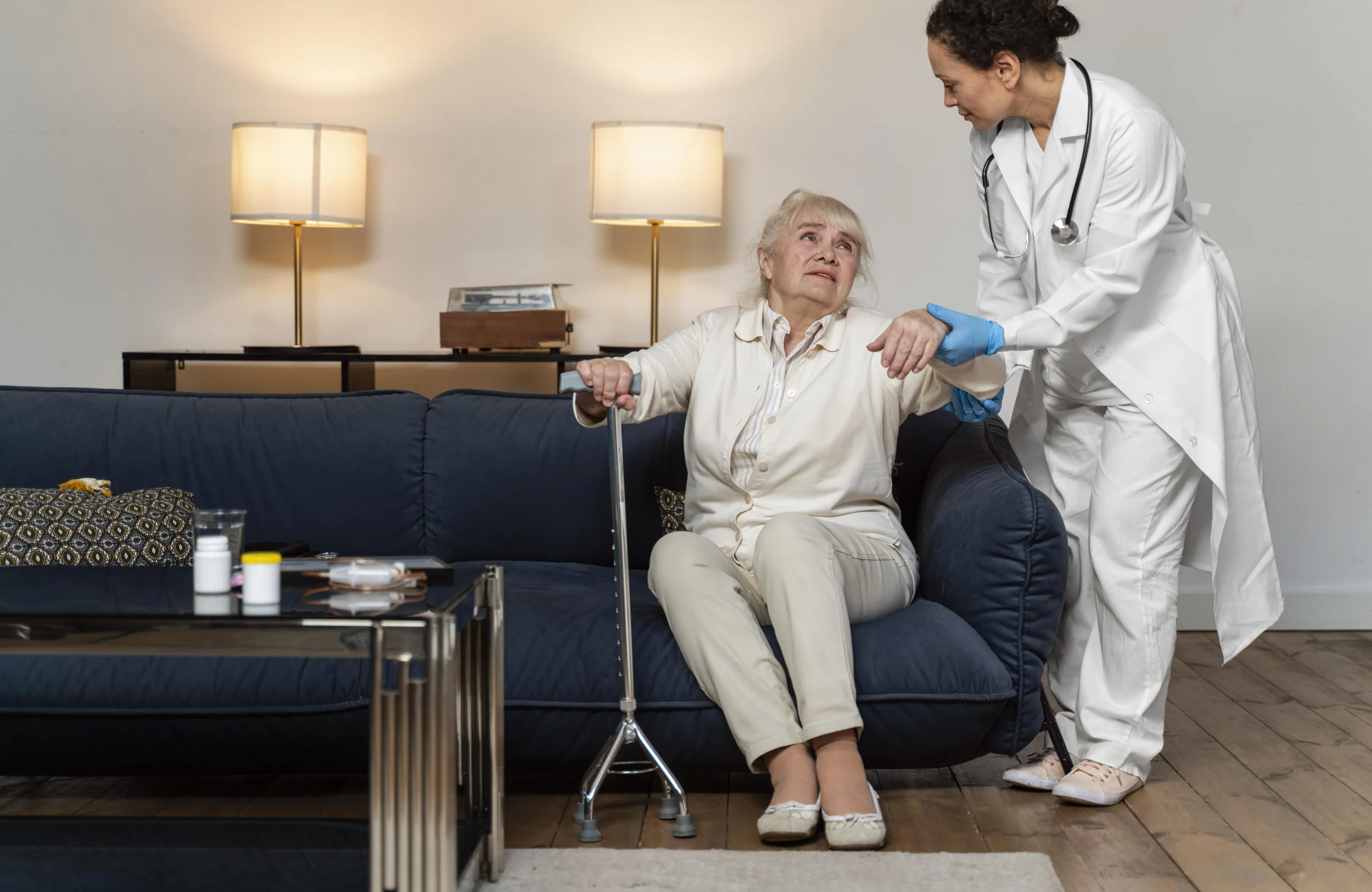
Parkinson’s care at home provides trained nursing support for patients living with Parkinson’s disease, covering medication management, mobility assistance, fall prevention, help with daily activities. coordination with the treating neurologist. WeCare24 assigns qualified nurses who understand the specific challenges of Parkinson’s and can adapt the care routine as the condition progresses. This service is available across Mangalore, Bangalore, Mysore, Udupi. Manipal.
Parkinson’s disease affects movement, balance, speech. over time, the ability to perform everyday tasks independently. Families often find themselves becoming full-time caregivers without the training or support they need. A professional nurse shares that load, keeps the patient safe, makes sure medication is given on time (which is especially important with Parkinson’s drugs). helps the patient maintain their daily routine and dignity at home.
What Parkinson’s Care at Home Covers
- Medication timing and adherence: Parkinson’s medications (levodopa, carbidopa, dopamine agonists) must be given at precise times to control symptoms. Our nurses administer medication on the exact schedule prescribed by the neurologist and document every dose
- Mobility and fall prevention: Supervised walking, transfer assistance (bed to chair, chair to toilet). home safety measures including cleared pathways, grab bars. non-slip surfaces
- Daily activity support: Help with bathing, dressing, grooming, toileting. eating, adapted to what the patient can still do independently and where they need a hand
- Tremor and rigidity management: Positioning support, gentle range-of-motion exercises. practical help with tasks that become difficult when hands shake or muscles stiffen
- Speech and swallowing support: Monitoring for swallowing difficulties (dysphagia) during meals, adjusting food texture when needed, and coordinating with a speech therapist if the neurologist recommends it
- Exercise coordination: Working with the patient on simple daily exercises recommended by the physiotherapist to maintain muscle strength, flexibility, and balance. For a full physiotherapy programme, see our physiotherapy at home services
- Emotional and cognitive support: Patience-based interaction, gentle encouragement, and monitoring for signs of depression, anxiety, or cognitive changes that should be reported to the doctor
- Health monitoring: Recording blood pressure (orthostatic hypotension is common in Parkinson’s), pulse, and any observations about symptom changes for the neurologist’s review
Signs Your Family Member Needs Professional Parkinson’s Care
- The patient has difficulty with daily activities like dressing, bathing, or eating and needs physical help to complete them safely
- Falls or near-falls have become frequent. This is especially true during transfers (getting out of bed, standing up from a chair) or while walking
- The medication schedule is complex, with multiple drugs at different times, and doses are being missed or given late
- The primary family caregiver is showing signs of burnout, exhaustion, or is struggling to manage the patient alone
- Swallowing has become difficult, with coughing during meals or food getting stuck, raising the risk of aspiration pneumonia
- Cognitive changes (confusion, memory lapses, or hallucinations) are making it harder for the patient to participate in their own care
- The neurologist has recommended home nursing support for daily management and regular monitoring
Family Caregiving vs Professional Home Care for Parkinson’s
| Factor | Family Caregiving | Professional Care (WeCare24) |
|---|---|---|
| Medication timing | Relies on family reminders; doses may shift with daily distractions | Nurse administers every dose at the exact prescribed time and logs it |
| Fall prevention | Family does their best, but may not know the highest-risk moments or techniques | Nurse identifies fall risks, supervises transfers, and applies trained techniques |
| Physical assistance | Can lead to injury for both patient and caregiver without proper technique | Nurse uses safe lifting and transfer methods that protect both parties |
| Caregiver fatigue | High risk of burnout when one person provides all care | Professional shifts give the family time to rest and recharge |
| Doctor communication | Family describes symptoms from memory at the next appointment | Nurse sends documented observations and blood pressure, pulse, and temperature reports to the neurologist regularly |
Stages of Parkinson’s and When Home Care Helps
Parkinson’s disease progresses through stages,. The level of home care support should match what the patient needs at each point:
- Early stage (mild symptoms): Tremor may appear on one side of the body, and daily tasks are still manageable. A nurse visiting a few times a week can help establish the medication routine, start fall-prevention habits, and set up a baseline for monitoring
- Mid stage (bilateral symptoms): Symptoms now affect both sides of the body. Walking slows, balance becomes unreliable, and dressing or bathing takes significantly longer. Part-time nursing (4 to 8 hours per day) supports the patient during the most difficult hours. The family handles the rest
- Advanced stage (significant disability): The patient may need a wheelchair, have severe rigidity, and require help with nearly all daily activities. Full-time or 24-hour nursing care keeps the patient safe, comfortable, and properly medicated. Many patients at this stage also benefit from bedridden patient care or catheter care at home
The transition between stages is gradual and varies for every patient. Our nurses adjust the care plan as new needs arise, in consultation with the family. The treating neurologist. Because Parkinson’s progression is unpredictable, the care plan is reviewed at least monthly and updated whenever the neurologist changes the medication or the patient’s daily abilities change noticeably.
Managing Daily Life with Parkinson’s at Home
Beyond medical tasks, our nurses help patients maintain their independence and quality of life through practical daily support:
- Meal support: Cutting food into manageable pieces, monitoring for swallowing difficulties, and making sure the patient eats and drinks enough throughout the day. When dysphagia is a concern, food texture is adjusted based on the doctor’s or speech therapist’s guidance
- Bathroom safety: Supervised toilet use, continence management, and personal hygiene support. For patients who develop urinary difficulties, see our catheter care at home services
- Sleep positioning: Helping the patient find comfortable positions at night, turning them to prevent pressure sores, and monitoring for sleep disturbances common in Parkinson’s
- Communication: Speaking slowly and clearly, giving the patient time to respond, and using visual or written cues when speech becomes very difficult
- Social engagement: Encouraging participation in household conversations, family activities, and hobbies that the patient can still enjoy,. This helps maintain mood and cognitive function
When to Call for Emergency Help
Parkinson’s patients can experience sudden changes that need immediate medical attention. If any of the following occur between nursing visits, contact the neurologist or call emergency services:
- A fall resulting in a head injury, inability to move a limb, or severe pain at the hip, wrist, or shoulder (fractures are common in Parkinson’s patients due to bone density loss and poor balance)
- Sudden high fever with extreme muscle rigidity,. This can indicate neuroleptic malignant syndrome or a severe medication reaction
- The patient chokes on food or liquid and cannot clear it by coughing, or shows signs of aspiration (coughing fits after eating, fever within hours of a meal)
- Abrupt worsening of symptoms that does not follow the normal “off” period pattern. This is especially true if medication was changed recently
- New or worsening hallucinations, severe confusion, or agitation that makes the patient a safety risk to themselves or others
- Inability to swallow medication at all,. This means Parkinson’s drugs cannot be taken and symptoms will worsen rapidly
At the start of care, our nurses give the family a written emergency sheet listing the neurologist’s number, the nearest hospital,. The WeCare24 coordination desk. Between visits, we are available by phone to help assess whether a situation is an emergency or can wait for the next scheduled nursing visit.
What Affects the Parkinson’s Care Plan
Each patient’s care needs are different,. The plan is built around their specific situation:
- The current stage of Parkinson’s disease and which symptoms are most prominent (tremor, rigidity, balance, speech, swallowing)
- The medication regimen and how many doses per day need to be given at precise times
- Whether the patient can still walk independently, needs supervision, or requires full transfer assistance
- Whether there are cognitive symptoms (confusion, memory issues, hallucinations) alongside the motor symptoms
- The presence of other conditions that need parallel monitoring, such as diabetes, cardiac disease, or urinary issues
- The family’s availability and physical ability to share caregiving duties between nursing visits
- Whether the patient also needs dementia care support, as Parkinson’s and dementia sometimes overlap in later stages
We assess all of these during the initial home visit and revisit the plan regularly. You can request an assessment or check our FAQs page for more information.
How We Set Up Parkinson’s Care at Home
- Neurologist’s recommendation review: We start with the treating neurologist’s notes, medication list, and any specific instructions. This forms the foundation of the home care plan
- Home safety assessment: A nurse visits the home to identify fall risks (loose rugs, poor lighting, bathroom hazards), recommend changes, and check that the layout supports safe movement with or without a walking aid
- Nurse assignment: We assign a nurse trained in neurological care who understands Parkinson’s-specific challenges. This includes medication timing, “on/off” periods, freezing episodes, and safe transfer techniques
- Family orientation: The nurse meets the family, explains the care routine, trains them on basic tasks they can handle between visits (safe walking support, recognising a fall risk, when to call for help), and sets up a communication channel for daily updates
- Ongoing care and neurologist reporting: The nurse documents every visit, tracks symptom patterns, medication response, blood pressure, pulse, and temperature, and any new concerns. Reports go to the neurologist. The family so treatment adjustments can be made promptly
Frequently Asked Questions
What does home-based Parkinson’s care include?
It includes medication timing and adherence support, mobility and fall prevention, help with daily activities (bathing, dressing, eating), tremor management support, exercise coordination, and regular reporting to the treating neurologist.
Can a nurse help with Parkinson’s medication timing?
Yes. Medication timing is critical in Parkinson’s management because even small delays can cause symptoms to return. Our nurses track doses, administer medication on schedule, and report any changes in the patient’s response to the treating doctor.
Is home care suitable for advanced-stage Parkinson’s?
For patients whose neurologist has approved home management, yes. Advanced-stage patients who need round-the-clock help with mobility, feeding, toileting, and personal care can be safely managed at home with trained nursing staff.
Do you provide physiotherapy for Parkinson’s patients?
We coordinate physiotherapy sessions as part of the care plan. Additionally, our team works with physiotherapists experienced in movement and balance exercises for neurological conditions. See our physiotherapy at home services for details.
How do you prevent falls?
Our care plan includes fall-prevention measures: clearing walkways, recommending grab bars and non-slip mats, supervised walking during risky times of day, and exercises to improve balance and leg strength. If a fall does occur, the nurse follows the emergency protocol immediately.
Can Parkinson’s care be combined with other home nursing services?
Yes. Many Parkinson’s patients also need catheter care, feeding support, wound care, or monitoring for other conditions like diabetes or cardiac disease. We create one combined care plan instead of separate services.
How often does a nurse visit for Parkinson’s care?
This depends on the stage of the disease. The patient’s daily needs. Early-stage patients may need part-time visits a few times a week. Mid- to advanced-stage patients often need 12-hour or 24-hour nursing care for continuous support.
Is Parkinson’s care at home available outside Mangalore?
Yes. Parkinson’s care at home is available across Mangalore, Bangalore, Mysore, Udupi, and Manipal.
Related Services
- Dementia Care at Home
- Elder Care Services in Mangalore
- Elderly Care Services in Bangalore
- Physiotherapy at Home
- Bedridden Patient Care
- Catheter Care at Home
- Palliative Care at Home
- Cardiac Care at Home
- Diabetes Care at Home
- Signs Your Elderly Parent Needs Home Care
- Home Nursing Services in Mysore
- WeCare24 Home Nursing FAQs
- Paralysis Care at Home
