
Reviewed and published by Surakat Ahmed, Founder & Managing Director, WeCare24 Home Nursing & Security Solutions (ISO 9001:2015 certified). More about WeCare24. Published: 4 June 2025 · Last updated: 22 September 2026
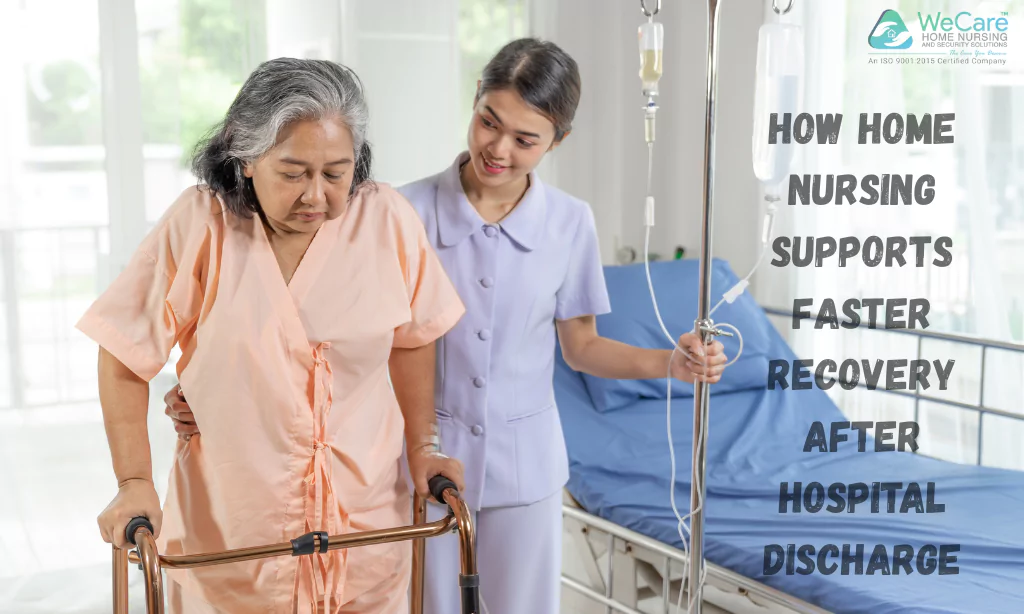
Recovering after a hospital stay can be challenging, especially when patients transition back to their homes. Without proper care, complications can arise, leading to readmissions or prolonged recovery times. This is where home nursing services play a crucial role. They provide personalized medical care at home, ensuring patients heal faster, safer, and more comfortably.
In this blog, we’ll explore how professional home nursing care supports faster recovery, reduces hospital readmissions, and improves overall well-being after discharge.
Why Recovery at Home is Challenging Without Professional Support
After being discharged from the hospital, many patients believe they can manage on their own or with minimal family assistance. However, medical recovery often requires:
- Proper wound care to prevent infections
- Medication management to avoid missed doses or incorrect usage
- Mobility assistance to prevent falls or injuries
- Monitoring vital signs to detect complications early
Without a trained nurse, patients and caregivers may struggle with these tasks, leading to setbacks. Home nursing services fill this gap by offering expert care tailored to individual needs.
How Home Nursing Accelerates Recovery
1. Personalized Medical Care at Home
Every patient has unique recovery needs. A skilled home nurse creates a customized care plan that may include:
- Wound dressing and infection prevention
- Administering IV therapy or injections
- Monitoring blood pressure, glucose levels, and oxygen saturation
- Managing catheters, feeding tubes, or tracheostomy care
With professional supervision, patients recover faster and avoid complications that could send them back to the hospital.
2. Medication Management for Better Compliance
One of the biggest risks after discharge is medication errors. Patients may forget doses, take incorrect amounts, or mix incompatible drugs. A home healthcare nurse ensures:
- Timely medication administration
- Proper dosage tracking
- Avoiding harmful drug interactions
- Educating patients and families on prescriptions
This reduces the risk of adverse reactions and promotes smoother healing.
3. Reduced Risk of Hospital Readmissions
Studies show that patients with home nursing support have lower readmission rates. Nurses detect early warning signs–like infections or abnormal vitals–before they become emergencies.
For example:
- A nurse monitoring a post-surgical patient can spot signs of infection early.
- A diabetic patient’s blood sugar levels can be stabilized before a crisis occurs.
This proactive approach keeps patients safe and prevents unnecessary hospital returns.
4. Physical Therapy & Mobility Support
After surgeries or major illnesses, patients often experience muscle weakness and balance issues. A home nurse or physiotherapist assists with:
- Safe movement and transfers (e.g., from bed to wheelchair)
- Rehabilitation exercises to regain strength
- Fall prevention strategies
This helps patients regain independence faster while minimizing injury risks.
5. Emotional & Psychological Support
Recovery isn’t just physical–it’s mental too. Being ill or bedridden can lead to depression, anxiety, or frustration. Home nurses provide:
- Companionship and emotional reassurance
- Encouragement for patients to stay motivated
- Support for family caregivers to reduce burnout
A positive mindset speeds up healing, making emotional care just as vital as medical treatment.
6. Nutritional Guidance for Faster Healing
Proper nutrition is key to recovery, yet many patients struggle with meal planning post-discharge. Home nurses can:
- Monitor dietary restrictions (e.g., low-sodium or diabetic-friendly meals)
- Ensure proper hydration
- Coordinate with dietitians for specialized meal plans
A well-balanced diet strengthens immunity, speeds wound healing, and boosts energy levels.
Who Benefits Most from Home Nursing After Hospital Discharge?
While home healthcare services help many patients, they are especially beneficial for:
Seniors recovering from surgeries
Chronic illness patients (diabetes, COPD, heart disease)
Post-stroke or injury patients needing rehab
Cancer patients requiring post-chemo care
New mothers needing postnatal support
Choosing the Right Home Nursing Service
Not all home care providers are the same. When selecting a service, consider:
Licensed and trained nurses (RNs or LPNs)
Customized care plans based on medical needs
Availability of 24/7 support for emergencies
Transparent pricing and insurance coverage
Final Thoughts
Recovering at home doesn’t mean recovering alone. Professional home nursing care ensures patients receive the right medical attention, medication management, and emotional support needed for a faster, safer recovery. By reducing complications and hospital readmissions, these services not only improve health outcomes but also provide peace of mind for patients and their families.
Note: All fees mentioned are approximate and subject to change. Please contact us for the latest pricing as of September 2026.
Frequently Asked Questions
What qualifications do WeCare24 home nurses have?
All WeCare24 nurses hold a GNM or BSc Nursing degree, are registered with the Karnataka State Nursing Council, and complete our in-house orientation covering patient safety, infection control, and family communication protocols before their first assignment.
How quickly can a home nurse be arranged?
In most cases, we can arrange a qualified home nurse within 24 to 48 hours of receiving your request. For urgent requirements such as post-hospital discharge, same-day placement may be possible depending on availability in your area.
Do you provide both day and night nursing shifts?
Yes. We offer flexible scheduling — 8-hour, 12-hour, and 24-hour shifts. You can choose day-only, night-only, or round-the-clock care depending on the patient’s condition and your family’s needs.
What is the typical cost of home nursing in Karnataka?
Home nursing costs vary based on shift duration, care complexity, and location. A 12-hour attendant shift generally starts around ₹800–₹1,200 per day in Mangalore and Bangalore as of 2026. Contact us for an exact quote based on your requirements.
Can I replace my assigned nurse if I am not satisfied?
Absolutely. If you or the patient are not comfortable with the assigned nurse for any reason, we will arrange a replacement at no extra charge. Patient comfort and trust are central to our care approach.
Why Patients Recover Faster at Home — The Clinical Evidence
The shift toward early hospital discharge followed by professional home nursing is not simply a cost-cutting measure — it is backed by growing clinical evidence that home environments, when supported by skilled nursing, produce better health outcomes for many patients.
Lower Infection Rates in Home Settings
Hospital-acquired infections (HAIs) remain a significant concern in healthcare facilities worldwide, including in India. Patients recovering at home are exposed to far fewer drug-resistant organisms than those in shared hospital wards. A home nurse maintains a clean care environment, follows proper hand hygiene and aseptic technique during wound dressings, and ensures that catheter sites and IV lines — when present — are handled with hospital-grade infection control protocols. The result is a measurably lower risk of secondary infections that could otherwise derail recovery.
Better Sleep and Nutrition in Familiar Surroundings
Sleep quality directly influences healing. Hospital environments — with their noise, light disruptions, and shared-room dynamics — often deprive patients of the deep, restorative sleep their bodies need. At home, patients sleep in their own beds, follow their natural circadian rhythms, and wake without disturbance. Similarly, personalised nutrition prepared with familiar ingredients and tailored to the patient’s dietary restrictions and preferences promotes faster tissue repair and immune function. WeCare24 nurses coordinate with dietitians when needed to ensure that meal plans align with specific recovery requirements — whether post-cardiac, post-diabetic surgery, or general post-operative healing.
The Critical First 72 Hours After Discharge
The initial three days following hospital discharge represent the highest-risk window for complications. During this period, a home nurse focuses on several priorities: verifying that all prescribed medications have been procured and are being taken at the correct doses and times, monitoring the surgical site or affected area for signs of infection or abnormal swelling, tracking vital signs against the baseline established at discharge, ensuring adequate hydration and nutrition, and managing pain within the physician’s prescribed framework. Families in Mangalore, Bangalore, and Udupi who arrange WeCare24 nursing immediately upon discharge often find that this structured first-72-hour approach prevents the small issues that otherwise escalate into hospital readmissions.
Medication Reconciliation — A Step Many Families Overlook
When patients leave the hospital, they often receive a new set of prescriptions that may partially overlap with, replace, or supplement their pre-existing medications. Without careful reconciliation, patients risk taking duplicate drugs, missing discontinued medications that are still in their home medicine box, or encountering dangerous interactions. A trained home nurse reviews the discharge summary alongside the patient’s existing medication inventory, creates a consolidated schedule, and flags any discrepancies with the treating physician. This single step eliminates one of the most common causes of post-discharge complications.
Warning Signs That Require Immediate Medical Attention
Professional home nurses are trained to recognise early warning signs that family members might dismiss or overlook. These include persistent fever above 100.4°F lasting more than 24 hours, sudden increase in wound drainage or change in its colour, unexplained confusion or drowsiness, difficulty breathing or a significant drop in oxygen saturation, sudden swelling in the legs that could indicate a blood clot, and chest pain or irregular heartbeat. Early identification of these symptoms, followed by prompt communication with the treating doctor, is where professional home nursing delivers its most critical value — turning a potential emergency into a manageable clinical adjustment.
