
Reviewed and published by Surakat Ahmed, Founder & Managing Director, WeCare24 Home Nursing & Security Solutions (ISO 9001:2015 certified). More about WeCare24. Published: 27 June 2026
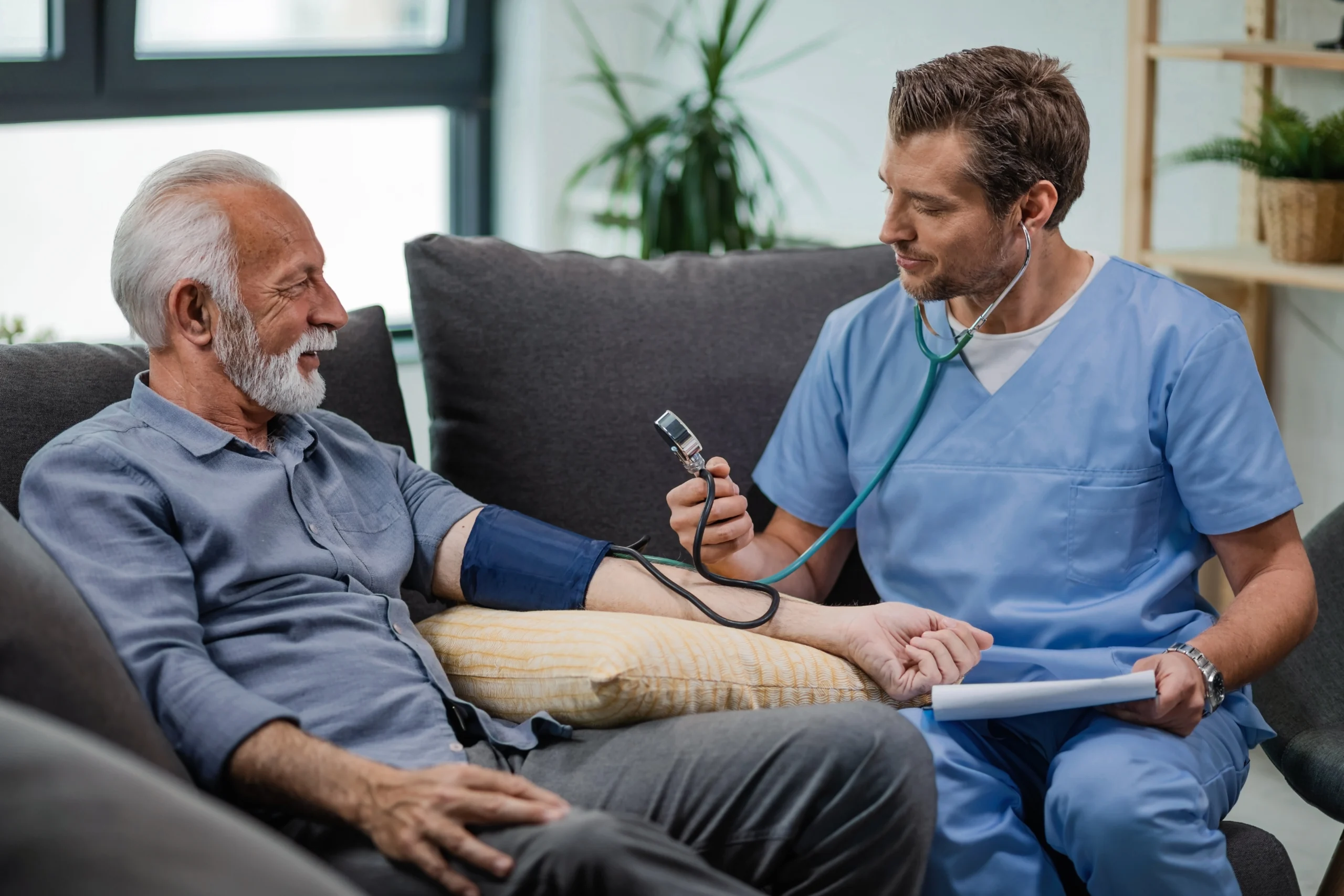
For elderly men living alone, the decision to accept professional nursing support at home is often a difficult one – made more complex by a genuine preference for independence and, in many cases, a reluctance to have female caregivers manage personal care. A male nurse for elderly care at home addresses both concerns directly: professional, clinically capable nursing support, delivered by someone with whom many elderly men feel more comfortable discussing and managing personal health.
Home nursing services in Bangalore have grown significantly since 2019 as families recognise that the specific needs of elderly male patients – post-surgical recovery, chronic condition management, mobility support, and daily personal care – are better served by trained male caregivers who can provide hands-on assistance without dignity barriers.
This article explains when professional male nursing support becomes necessary, what a male nurse does daily, how this care improves quality of life, what specialised services are available, and how families can choose the right provider – specifically for elderly men living independently in Bangalore.
Challenges Faced by Elderly Men Living Alone
The challenges of living alone in later life accumulate gradually and are often underestimated by both the senior and his family until a crisis event – a fall, a missed medication cycle, or a hospitalisation – makes the scale of unmet need visible. For elderly men specifically, independence is often a deeply held value, which means the actual support deficit is frequently larger than it appears from the outside.
- Age-related physical limitations: Muscle weakness (sarcopenia), reduced grip strength, joint stiffness from arthritis, and slower reflexes combine to make tasks that were routine at 65 physically challenging or risky at 75 and beyond
- Difficulty managing daily activities: Bathing, cooking, laundry, and household management each carry injury risk for elderly men with reduced balance or upper body strength – risks that are invisible until an incident occurs
- Increased fall risk: Falls are the leading cause of injury-related hospitalisation among elderly men in India. An elderly man living alone who falls may not receive assistance for hours – creating secondary complications from delayed response
- Medication management challenges: Many elderly men manage 4–8 medications simultaneously across different schedules. Without external support, missed doses, incorrect timing, and confusion between similar-looking tablets are common
- Loneliness and social isolation: The Longitudinal Ageing Study in India (LASI) documented significant rates of social isolation among elderly men living alone – a condition linked to accelerated cognitive decline and poorer physical health outcomes
When Should Families Consider Hiring a Male Nurse?
The question families most often ask is not whether their elderly parent needs support – it is when the need has crossed the threshold where professional nursing assistance is the right response rather than informal family help.
| Situation | Professional Male Nursing Indicated? | Why |
| Frequent falls or near-falls | Yes – immediately | Physical safety risk is active; a trained caregiver prevents the incident rather than responding to it |
| Missed medications consistently | Yes | Medication non-adherence in chronic condition management creates compounding health risk |
| Discharge from hospital | Yes – from day one | The 30–90 days post-discharge are the highest readmission risk period for elderly men |
| Reduced mobility / unable to walk unaided | Yes | Transfer and ambulation support requires training – untrained family assistance causes injury to both |
| Chronic condition worsening | Yes | Conditions including diabetes, hypertension, and COPD require structured daily monitoring |
| Increasing difficulty with personal care | Yes | Hygiene-related infections develop rapidly in elderly men with limited self-care capacity |
| Family caregiver experiencing burnout | Yes | Caregiver burnout reduces care quality for the patient – professional support restores both |
Personal Care Assistance for Senior Men
Personal care – bathing, grooming, dressing, and hygiene management – is the area where elderly men most frequently report discomfort with female caregivers. A male nurse for elderly care at home eliminates this barrier, allowing personal care to be delivered without embarrassment or resistance from the patient.
- Bathing and grooming: Safe bathing with appropriate physical support – verifying water temperature, managing balance in the bathroom, and assisting with shaving, hair care, and skin care. Bathroom environments are the highest fall-risk area for elderly men
- Dressing assistance: Helping the senior dress and undress comfortably, managing buttons or closures he cannot manage independently, and following his clothing preferences to preserve dignity and personal identity
- Toileting and hygiene care: Assisting with safe toilet access, managing continence care where applicable, and maintaining hygiene standards that prevent skin breakdown and infection – all conducted with privacy maintained
- Maintaining dignity: A trained male caregiver for elderly men understands that personal care assistance must never feel like a loss of control – the senior’s preferences, privacy, and comfort govern every interaction
Mobility and Safety Support at Home
Elderly care services at home for men with reduced mobility must cover both reactive safety (responding when a fall occurs) and proactive safety (preventing the fall from happening). A trained male nurse provides both – and the proactive component is the more valuable of the two.
- Assistance with walking and movement: Walking alongside the senior, providing a steadying arm, supervising the use of a walking frame or cane, and monitoring for gait instability that indicates increasing fall risk
- Fall prevention: Environmental assessment – removing loose rugs and clutter, ensuring non-slip mats in the bathroom, confirming adequate lighting in corridors, and keeping frequently used items at accessible height
- Safe transfers: Correct technique for bed-to-chair and chair-to-toilet transfers is one of the most important skills a trained caregiver brings. Incorrect transfer technique is a common cause of injury in home care settings for both the patient and the caregiver
- Monitoring physical stability: Observing changes in the senior’s balance, strength, and movement pattern over time – and reporting deterioration to the family before it becomes a crisis
Medication and Health Monitoring
Senior citizen nursing care at home includes structured health monitoring that provides the family with confidence that the senior’s condition is being observed and managed between clinical appointments. For elderly men with multiple chronic conditions, this daily monitoring is clinically significant.
- Medication reminders and administration support: Following the physician’s prescribed schedule, reminding the senior of each medication’s correct timing, and confirming that medications have been taken. INC-registered nurses on WeCare24’s team can administer medications where prescribed – a capability that requires nursing qualification and is not provided by care attendants
- Monitoring vital signs: Recording blood pressure, pulse, oxygen saturation, and blood glucose where equipment is available and the nurse has been instructed by the treating physician. Readings are documented and reported – not interpreted independently
- Tracking health changes: Observing changes in the senior’s appetite, alertness, skin condition, urine output, and mobility – and documenting these in the daily care log for the family’s review
- Communicating with family and doctors: Any significant change in condition is reported to the family immediately. WeCare24’s care structure includes coordination support between the nursing team and the senior’s treating physician where relevant
Providing Companionship and Emotional Support
Elderly men living alone are at higher risk of depression and accelerated cognitive decline compared to those with regular social contact. The emotional dimension of nursing care – often undervalued relative to its clinical counterpart – is a meaningful component of what WeCare24’s male nurses provide.
- Reducing loneliness: A consistent, familiar male caregiver provides daily social contact – conversations about the senior’s interests, news, family updates, or topics he finds engaging. This regular interaction is a documented protective factor against cognitive decline
- Encouraging social interaction: Supporting the senior’s participation in family phone or video calls, facilitating visits from friends or relatives, and maintaining the senior’s connection to his social network
- Building trust and companionship: The most effective care relationships develop through consistency and reliability. An elderly man who trusts his male nurse cooperates more effectively with all aspects of his care – the relationship itself is therapeutically valuable
- Supporting emotional well-being: Observing and responding to signs of low mood, anxiety, or loss of interest in activities – and reporting persistent emotional changes to the family. Emotional well-being and physical health are inseparable in elderly male care
Encouraging Independence While Ensuring Safety
The goal of male nurse home care in Bangalore is not to replace what an elderly man can do independently – it is to support what he cannot do safely alone. This distinction matters enormously to the senior’s sense of dignity and self-efficacy, and it should be the foundation of every care plan.
- Maintaining daily routines: Helping the senior follow his established morning, meal, activity, and sleep schedule – supporting consistency, which benefits both physical health and psychological well-being
- Supporting self-care: Assisting only with the specific tasks the senior cannot manage safely – not taking over tasks he can still do with minimal support. Preserving the senior’s participation in his own care maintains function and confidence
- Promoting confidence: Seniors who receive appropriate support – neither too much nor too little – report higher satisfaction with their care and greater confidence in their own capability. This balance requires clinical judgment and patient observation
- Balancing assistance with autonomy: A professional male caregiver asks the senior’s preference, follows his lead in personal care decisions, and treats his choices with respect – even when the caregiver’s clinical assessment would suggest a different approach
Supporting Healthy Lifestyle Habits
Day-to-day health habits – nutrition, hydration, movement, and sleep – have a compounding effect on elderly men’s health over months and years. A male nurse’s consistent presence allows these habits to be actively supported rather than left to chance.
- Proper nutrition: Preparing or supervising meals that meet the senior’s dietary requirements – low-sodium for hypertension, low-glycaemic for diabetes, soft foods where dental or swallowing issues are present – following the physician’s dietary guidance
- Maintaining hydration: Elderly men are particularly susceptible to dehydration – physiologically, they have a reduced thirst response. A nurse actively encourages fluid intake throughout the day, particularly during Bangalore’s warm weather months
- Light exercise and movement: Supporting prescribed physiotherapy exercises, encouraging short walks within the home or compound, and facilitating the gentle movement that preserves muscle mass and cardiovascular function
- Sleep routine support: Maintaining consistent sleep and wake times, limiting disruptive late-day stimulation, and monitoring sleep quality – poor sleep in elderly men is associated with increased fall risk, cognitive decline, and mood deterioration
Post-Hospitalization Recovery Support
The 30–90 days following hospital discharge are the period of highest readmission risk for elderly men. A structured home nursing response to this period – with a trained male nurse following discharge instructions, monitoring recovery progress, and identifying warning signs – is one of the highest-value interventions available in elderly home care.
- Recovery monitoring: Documenting the senior’s daily recovery trajectory – activity level, appetite, pain indicators, and sleep – and reporting deviations from expected recovery to the family and treating physician
- Wound care assistance: For INC-registered nurses, wound assessment, dressing changes, and monitoring for infection are within clinical scope – where prescribed by the treating physician and documented in the care plan
- Following discharge instructions: Ensuring the senior adheres to activity restrictions, medication schedules, dietary modifications, and follow-up appointment requirements as specified in the hospital’s discharge summary
- Preventing readmission: Identifying early warning signs – wound site changes, fever, increased pain, altered mental status, respiratory difficulty – and escalating promptly. Timely escalation prevents the emergency readmission that represents both a medical and financial crisis for the family
Care for Chronic Medical Conditions
Elderly men in India carry a significant chronic disease burden – diabetes, hypertension, and arthritis are the three most prevalent conditions in men above 60, according to the Longitudinal Ageing Study in India (LASI). Managing these conditions at home requires consistent daily support that a visiting nurse or family member without clinical training cannot reliably provide.
| Condition | What a Male Nurse Monitors and Supports |
| Diabetes | Blood glucose recording, dietary compliance, hypoglycaemia symptom observation, foot care and inspection, medication schedule adherence |
| Hypertension | Blood pressure recording, sodium dietary compliance, medication timing, symptom observation (headache, dizziness, blurred vision) |
| Arthritis | Joint comfort, prescribed mobility exercises, anti-inflammatory medication timing, functional assessment |
| COPD | Respiratory rate and effort, oxygen saturation, inhaler use technique, activity tolerance monitoring |
| Post-stroke care | Limb mobility exercises, speech interaction, fall prevention, cognitive status observation |
| Parkinson’s disease | Medication timing (highly time-sensitive), mobility and balance support, fall prevention, tremor-adapted personal care |
Assistance for Bedridden and Mobility-Impaired Seniors
For elderly men who are bedridden or have severe mobility impairment, the male nurse’s role shifts to comfort-focused care that maintains skin integrity, prevents secondary complications, and supports the senior’s quality of life within the limitations his condition imposes.
- Position changes and pressure sore prevention: Regular repositioning – typically every 2 hours – prevents pressure ulcers at bony prominences. Pressure sores are both painful and dangerous for bedridden elderly men and are largely preventable with consistent, trained care
- Feeding assistance: For men unable to feed themselves independently, the nurse provides feeding support with appropriate positioning, pace control, and aspiration precautions
- Personal hygiene management: Complete bed baths, skin care, oral hygiene, and continence management – all performed to maintain dignity and prevent the infections that develop rapidly in immobile elderly men
- Comfort-focused care: Maintaining the senior’s physical comfort through appropriate positioning, pain observation, and environmental adjustments – and remaining a consistent, calm presence that reduces the anxiety common in bedridden elderly men
Qualities to Look for in a Professional Male Nurse
Not all home nursing providers have the same standards. Families choosing a male caregiver for elderly men should evaluate specifically on these criteria:
- Nursing qualifications: INC (Indian Nursing Council) registration with GNM, ANM, or B.Sc Nursing qualification is the baseline for clinical nursing care. For personal care attendants, documented training in elderly care protocols should be verified with the agency
- Elderly care experience: Ask specifically about experience with the senior’s conditions – a male nurse experienced with post-stroke care has different competencies from one experienced in diabetes management. Match the experience to the specific clinical situation
- Compassion and patience: Elderly men who value independence often resist care. A caregiver who cannot maintain patience under this resistance – or who responds with frustration – will not deliver effective care
- Communication skills: The nurse must be able to communicate clearly with the senior in a language and register he is comfortable with, and report clearly to the family. For Bangalore families, language compatibility – Kannada, Tamil, Malayalam, or English – is a practical consideration
Questions to Ask Before Hiring a Male Nurse
| Question | Why It Matters |
| What is the nurse’s INC registration status and qualification? | Clinical care requires INC registration – unqualified staff cannot safely administer medications or manage wounds |
| What specific elderly care conditions has this nurse managed? | Experience match to the senior’s actual conditions is more important than general elderly care experience |
| How is availability managed if the assigned nurse is unavailable? | A sick leave day without a replacement plan leaves the senior without care – ask for the agency’s relief nurse protocol |
| What is the process for medical emergencies? | The nurse must know when to call for emergency services and how to support the senior until they arrive |
| Has the caregiver undergone police verification and background check? | Non-negotiable for any caregiver entering an elderly person’s home – ask for written confirmation from the agency |
| How does the agency monitor care quality after placement? | An agency that places staff without follow-up monitoring cannot guarantee consistent care standards |
Benefits of Professional Male Nurse Home Care Services
For elderly men and their families, the decision to engage professional male nurse home care in Bangalore delivers measurable benefit across multiple dimensions:
- Personalised one-on-one attention: Home-based nursing provides individual-focused care that institutional settings cannot replicate – the nurse’s attention is on one patient
- Enhanced safety and comfort: Proactive fall prevention, medication management, and home environment safety monitoring reduce the incidents that generate emergency hospitalisation
- Reduced family caregiver stress: Working family members can fulfil their professional responsibilities with confidence that their elderly parent is being monitored and supported by a trained professional
- Better health outcomes: Consistent daily health monitoring, medication adherence, and early warning sign identification produce demonstrably better outcomes for elderly men with chronic conditions compared to unsupported home living
Why Families Trust Male Nurse Assistance for Elderly Men Living Alone
WeCare24 provides male nurse home care in Bangalore through a team of INC-registered nurses and trained male care attendants – all police-verified, all operating under the company’s ISO 9001:2015 quality management framework established since 2019. Every placement includes a documented care plan, a named care coordinator, and 24/7 family support access.
| Why Families Choose WeCare24 | What This Delivers for the Senior |
| INC-registered male nurses | Clinical capability for medication administration, wound care, and health monitoring |
| Police-verified caregivers | Safety assurance for families who cannot be present daily |
| ISO 9001:2015 quality framework | Documented care standards and accountability for every placement |
| 24/7 availability and support | Emergency response and family access around the clock |
| Personalised care plans | Nursing care calibrated to the individual senior’s specific conditions and preferences |
| Senior-specific male caregiving | Dignity-sensitive personal care that elderly men accept without resistance |
| Mangalore, Bangalore, Mysore coverage | Regional reach serving families across Karnataka |
| Male Nurse Home Care for Elderly Men – Bangalore, Mangalore & Mysore
WeCare24 provides INC-registered, police-verified male nurses and male care attendants for elderly men living alone in Bangalore, Mangalore, Mysore, Udupi, and Manipal. ISO 9001:2015 certified. 24/7 support. Same-day deployment available for most Bangalore locations. 📞 Call / WhatsApp: +91 63643 03333 ✉ Email: info@wecare24.co |
Frequently Asked Questions
Why specifically request a male nurse for an elderly man?
Male nurse for elderly care at home is preferred by many elderly men for personal care tasks – bathing, toileting, and continence care – where they feel significantly more comfortable with a same-gender caregiver. Beyond comfort, male nurses often find it easier to build the trust and rapport with elderly male patients that produces effective, cooperative care. Clinically, the gender of the nurse does not affect care quality – the preference is about dignity, comfort, and the senior’s willingness to accept care.
What is the difference between a male nurse and a male care attendant?
A male nurse holds INC (Indian Nursing Council) registration with a GNM, ANM, or B.Sc Nursing qualification and can provide clinical services – medication administration, wound care, and clinical monitoring. A male care attendant provides non-clinical personal care support – bathing, grooming, mobility assistance, and companionship. Both are available through WeCare24. The right choice depends on whether the senior requires clinical care or personal care support – or both.
Can WeCare24 provide a male nurse in Bangalore quickly?
Male nurse home care in Bangalore from WeCare24 can be initiated within 24–48 hours for most Bangalore locations. For non-emergency placements, the care plan is prepared and the caregiver is matched following an initial assessment. For urgent requirements – hospital discharge, family emergency, or sudden loss of current carer – WeCare24 can mobilise same-day coverage in many cases. Contact +91 63643 03333 with the specific requirement and location.
Is a background check done for WeCare24’s male caregivers?
All WeCare24 nurses and care attendants – male and female – undergo police verification and identity verification (Aadhaar or equivalent) before placement. The agency operates under an ISO 9001:2015 quality framework and families can request written confirmation of verification status before any caregiver begins. This is a non-negotiable standard – no WeCare24 placement proceeds without completed background verification.
What areas in Bangalore does WeCare24 cover for male nurse home care?
WeCare24 covers all major residential areas of Bangalore for male nurse home care – Whitefield, Marathahalli, Electronic City, Indiranagar, Koramangala, Jayanagar, Yelahanka, HSR Layout, Hebbal, and the Outer Ring Road corridor. Services are also available in Mangalore, Mysore, Udupi, and Manipal. Contact the team to confirm coverage and deployment time for your specific address.
| Written by
L K Monu Borkala Chief Strategist, OneCity Technologies L K Monu Borkala is a digital marketing strategist with 20+ years of experience producing informational content across healthcare services, home care, and professional services verticals. This article is produced for informational purposes only. Consult a licensed healthcare provider or registered home care agency before making decisions about home nursing or care arrangements. LinkedIn: https://www.linkedin.com/in/monuborkala/ |
Note: All fees mentioned are approximate and subject to change. Please contact us for the latest pricing as of September 2026.
