
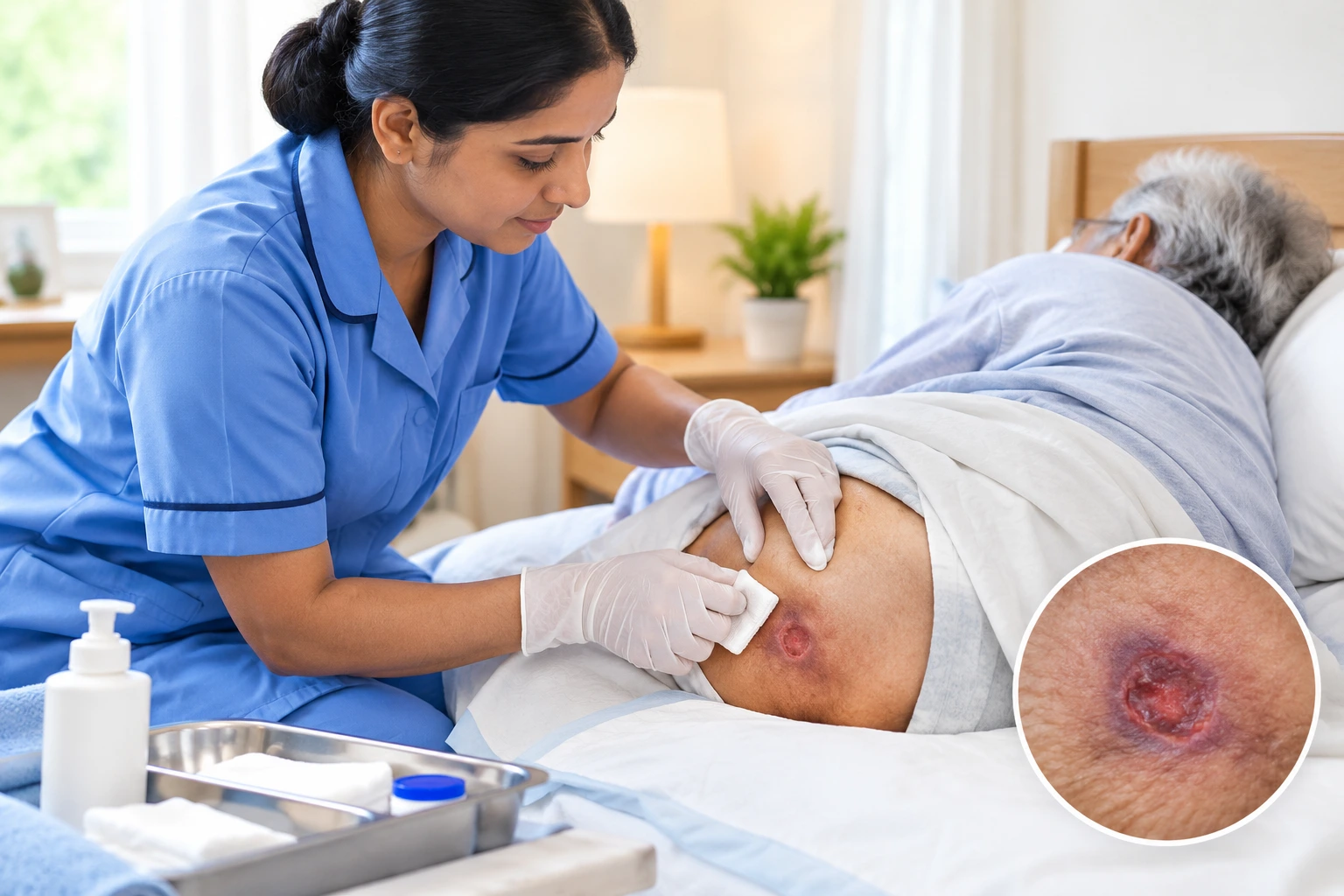
A patient who spends most of the day in bed or in a chair can develop painful damaged skin within days. Pressure sore care at home is skilled nursing support to prevent, treat, and heal pressure sores, also called bedsores or pressure ulcers. A trained nurse checks the skin, changes the patient’s position, dresses open wounds, advises on mattresses and nutrition, and teaches the family how to protect the skin between visits.
Pressure sores rarely appear without warning. They begin as a patch of red skin that does not fade when pressed, and they can become deep wounds in a short time. Early care is simple, while late care is slow, painful, and costly. WeCare24 nurses provide pressure sore care in Mangalore, Bangalore, Mysore, Udupi, and Manipal, working with the patient’s own doctor.
What Pressure Sore Care at Home Covers
- Full skin assessment: Checking the heels, hips, tailbone, shoulders, elbows, and back of the head at every visit, and recording any change.
- Risk scoring: Using a simple risk scale to judge how likely new sores are, so the care plan matches the patient.
- Repositioning plan: Setting a turning schedule and teaching the family how to turn and lift without dragging the skin.
- Wound cleaning and dressing: Cleaning open sores and applying the dressings chosen by the doctor, with careful records of size and healing.
- Equipment advice: Helping the family choose pressure-relieving mattresses, cushions, and heel protectors.
- Skin hygiene: Keeping skin clean and dry after bathing, sweating, and toilet use.
- Nutrition and fluids: Encouraging enough protein, calories, and water to support healing.
- Infection watch: Looking for heat, smell, pus, or fever, and reporting them to the doctor the same day.
- Pain comfort: Handling dressings gently and reporting pain so the doctor can adjust treatment.
- Family teaching: Showing relatives what to look for each day and when to call.
Why Pressure Sores Develop
Pressure sores form when constant pressure squeezes the skin against bone and cuts off blood flow. Without blood, the skin cells starve and break down. Friction from sliding in bed and moisture from sweat or urine make the damage worse. Several factors raise the risk:
- Staying in one position for hours, especially for patients who cannot move on their own.
- Poor nutrition, low protein, or dehydration, which weakens skin.
- Loss of feeling, which hides pain that would normally make a person shift.
- Moisture from incontinence or heavy sweating.
- Thin, fragile skin in older adults.
- Conditions that affect circulation, such as diabetes and heart disease.
- Rough bed sheets, creases, or dragging during transfers.
Where Pressure Sores Usually Form
Sores form over bony areas. The location depends on the position the patient spends the most time in. Patients lying on their back are at risk on the tailbone, heels, shoulder blades, elbows, and the back of the head. Patients lying on their side are at risk on the hips, knees, ankles, and ears. Those who sit for long periods are at risk on the tailbone and under the thighs. Because the heels carry the full weight of the legs, they need special attention.
The Four Stages of a Pressure Sore
Doctors and nurses describe pressure sores in four stages. Knowing them helps families act early.
- Stage 1: The skin is intact but red, and the redness does not fade when pressed. The area may feel warm, firm, or sore.
- Stage 2: The top layer of skin breaks, forming a shallow open sore or a blister. The area is painful.
- Stage 3: The sore goes deeper into the fatty layer under the skin and looks like a crater.
- Stage 4: The sore reaches muscle, tendon, or bone. It needs urgent medical review and often specialist care.
Some sores cannot be staged because dead tissue covers the wound. Others look like bruises that are purple or maroon, which can mean deeper damage. Any stage 2 or deeper sore should be seen by a doctor.
Signs Your Family Needs Professional Pressure Sore Care at Home
- The patient is bedridden, paralysed, or too weak to change position without help.
- There is a patch of red skin that stays red after pressure is removed.
- A blister or open sore has appeared on the heel, hip, or tailbone.
- An existing sore is getting bigger, deeper, or smelling bad.
- The patient has been discharged from hospital with a dressing plan the family cannot manage.
- The patient has diabetes, which slows healing. See diabetes care at home.
- The main caregiver is tired and unsure how often to turn the patient.
Hospital Stay vs Home Nursing Support
| Factor | Staying in Hospital | Home Nursing Support (WeCare24) |
|---|---|---|
| Skin checks | Done by ward staff with many patients to watch | Done at every visit by a nurse who knows the patient |
| Turning schedule | Depends on ward workload | Planned around the patient and taught to the family |
| Infection risk | Exposure to hospital germs | Familiar, quieter home setting |
| Comfort and sleep | Noise, light, and a strange bed | Own bed, family nearby, calmer rest |
| Cost | Daily bed charges add up over weeks | Pay only for the visits the plan needs |
| Family confidence | Families watch from the side | Families learn and take part |
A Daily Prevention Routine
Prevention is far easier than treatment. Our nurses build a routine like this one and teach it to the family:
- Check the skin: Look at every bony area at least once a day, and more often if the patient is sweating or incontinent.
- Change position: Turn a bedridden patient at the interval the nurse sets, and shift weight often for a patient who sits.
- Clean and dry: Wash soiled skin gently with a mild cleanser, pat dry, and never rub.
- Smooth the bed: Remove creases from sheets and clothing, and keep crumbs out of the bed.
- Protect the heels: Lift the heels off the bed with a pillow under the calves.
- Offer food and water: Give regular meals, protein, and fluids as the doctor advises.
- Record and report: Write down any new redness or sore, and tell the nurse the same day.
Repositioning the Right Way
Turning a patient is not as simple as rolling them over. Dragging the skin across the sheet causes friction injury, which can start a sore. Instead, use a draw sheet to lift and move the patient, and keep the head of the bed as low as the doctor allows, because a raised bed causes sliding. When lying on the side, a pillow between the knees and ankles prevents bone pressing on bone. Aim for a tilt of about thirty degrees rather than lying flat on the hip bone. Our nurses show families each of these steps during the first visits.
Mattresses, Cushions, and Equipment
The right surface reduces pressure but does not replace turning. The doctor or nurse can advise on the best choice for the patient’s risk level:
- Foam mattresses with a pressure-relieving layer for patients at moderate risk.
- Alternating-pressure air mattresses for patients at high risk or with existing sores.
- Seat cushions for people who sit in a wheelchair or chair for long hours.
- Heel protectors or pillows to lift the heels off the bed.
- Bed rails and trapeze handles to help patients shift on their own when they can.
Ring-shaped or donut cushions are best avoided, because they can reduce blood flow to the skin they surround. For patients who cannot move at all, see bedridden patient care.
Skin Care and Hygiene
Healthy skin resists damage. Bathing should use warm, not hot, water and a mild cleanser. Dry the skin completely, especially in folds. A moisturiser on dry skin helps, but rubbing red areas should be avoided because it can damage the tissue underneath. For incontinent patients, prompt cleaning and a barrier cream, if advised, protect the skin from moisture. Cotton clothing and bedding allow the skin to breathe.
Nutrition and Hydration for Skin Healing
The body needs fuel to rebuild skin. Protein, energy, vitamins, and water all matter. Patients with a poor appetite may do better with small meals through the day and nutritious snacks, such as eggs, dal, curd, milk, paneer, or soft fish where allowed. The doctor or dietitian may suggest supplements. Patients who cannot swallow safely may need help from tube feeding care at home. Patients with kidney or liver conditions should follow their own diet limits.
Dressing Changes and Wound Management
An open pressure sore needs regular cleaning and dressing. The nurse follows the doctor’s instructions, uses sterile technique, and selects a dressing that keeps the wound moist and protected. At each visit the nurse looks at the size, depth, colour, and smell of the wound and measures its progress. Dead tissue, if present, is removed only by a doctor or a specially trained clinician. Deep stage 3 and stage 4 sores may need specialist review, and some need hospital care. You can read more on our wound care at home page.
Signs of Infection
Infected sores heal slowly and can spread to blood or bone. Tell the nurse or doctor at once if you notice any of the following:
- Increasing redness, warmth, or swelling around the sore.
- Pus or cloudy fluid coming from the wound.
- A foul smell, even after cleaning.
- Increasing pain in the area.
- Fever, chills, or new confusion.
Things Families Should Avoid
- Massaging red or bony areas, which can damage tissue.
- Using ring-shaped or donut cushions.
- Dragging the patient across the sheet.
- Leaving the patient on one side or the back for hours.
- Applying home remedies, powders, or creams to open sores without the doctor’s advice.
- Leaving wet or soiled clothing and sheets on the skin.
- Delaying a call to the doctor because the sore “looks small”.
When to Call for Emergency Help
Take the patient to the nearest hospital or call the emergency number if any of the following occurs:
- A sore with black or dead tissue, or one that reaches deep into the body.
- Fever with shivering, fast breathing, or a very fast heartbeat.
- Confusion or extreme drowsiness along with an infected sore.
- Spreading redness, heavy bleeding, or heavy pus.
- Sudden severe pain at a sore site.
Our nurses leave a written plan with the family at the first visit. It lists the doctor’s number, the nearest hospital, and the WeCare24 coordination desk.
What Affects the Pressure Sore Care Plan
The plan depends on the patient’s skin, mobility, and overall health. We adjust it as the sore changes and as the doctor updates treatment.
- The stage, size, and position of any existing sore.
- How much the patient can move without help. See paralysis care at home.
- Other conditions, such as diabetes, kidney disease, or heart disease.
- Nutrition, swallowing, and weight.
- Bladder and bowel control, and any catheter in use. See catheter care at home.
- The equipment already at home, such as the mattress and cushions.
- The goal of care, which may be healing, prevention, or comfort. For comfort-focused care, see palliative care at home.
How We Set Up Pressure Sore Care at Home
- First assessment: A nurse examines the skin, reviews reports, and notes the medicines and diet.
- Care plan: We agree a visiting schedule, turning plan, and dressing routine with the family and doctor.
- Equipment check: We suggest changes to the bed, mattress, and cushions.
- Family training: Relatives learn safe turning, skin checks, and the warning signs.
- Regular visits: The nurse dresses wounds, records progress, and reports changes to the doctor.
- Review: We review the plan as the sore heals and reduce visits when it is safe to do so.
Request a home assessment to get started, or read our FAQs page for more information. Families in Mangalore and Bangalore can also browse our home nursing services in Mangalore and home nursing services in Bangalore.
Frequently Asked Questions
What is the difference between a pressure sore and a bedsore?
They are the same condition. Doctors use the term pressure sore or pressure ulcer, while families often say bedsore. Both mean skin and tissue damaged by pressure, usually over a bony area.
How often should a bedridden patient be turned?
The doctor or nurse sets the interval for each patient, based on the skin and the mattress in use. Many bedridden patients are turned about every two hours, but some need more or less. Follow the written plan from the nurse.
Can a pressure sore heal at home?
Yes, many do, particularly stage 1 and stage 2 sores, when pressure is removed and the skin is kept clean. Deeper sores heal more slowly and may need specialist or hospital care. The doctor decides what is safe at home.
What should I do if I notice red skin that does not fade?
Take the pressure off that area straight away by changing the patient’s position, and do not rub or massage it. Tell the nurse or doctor the same day, because early redness is the best time to stop a sore.
Which mattress is best for preventing bedsores?
It depends on the patient’s risk. A foam pressure-relieving mattress suits many patients, while an alternating-pressure air mattress suits high-risk patients. The nurse can advise on the right choice, and turning is still needed with any mattress.
Does diet really help a pressure sore heal?
Yes. The body needs protein, calories, vitamins, and water to rebuild skin. A poor diet slows healing and raises the chance of new sores, so we review meals at each visit and work with the doctor or dietitian.
Do your nurses remove dead tissue from a sore?
No. Removing dead tissue is done by a doctor or a specially trained clinician. Our nurses clean and dress the wound, monitor healing, and arrange medical review when the doctor advises it.
Is pressure sore care at home available in Bangalore and Mysore?
Yes. Pressure sore and bedsore care at home is available across Mangalore, Bangalore, Mysore, Udupi, and Manipal.
Related Services
- Wound Care at Home
- Bedridden Patient Care
- Paralysis Care at Home
- Stroke Rehabilitation at Home
- Diabetes Care at Home
- Catheter Care at Home
- Tube Feeding Care at Home
- Dementia Care at Home
- Palliative Care at Home
- Elder Care Services in Mangalore
- Home Nursing Services in Mangalore
- Home Nursing Services in Bangalore
- WeCare24 Home Nursing FAQs
