
Reviewed and published by Surakat Ahmed, Founder & Managing Director, WeCare24 Home Nursing & Security Solutions (ISO 9001:2015 certified). More about WeCare24. Published: 30 September 2026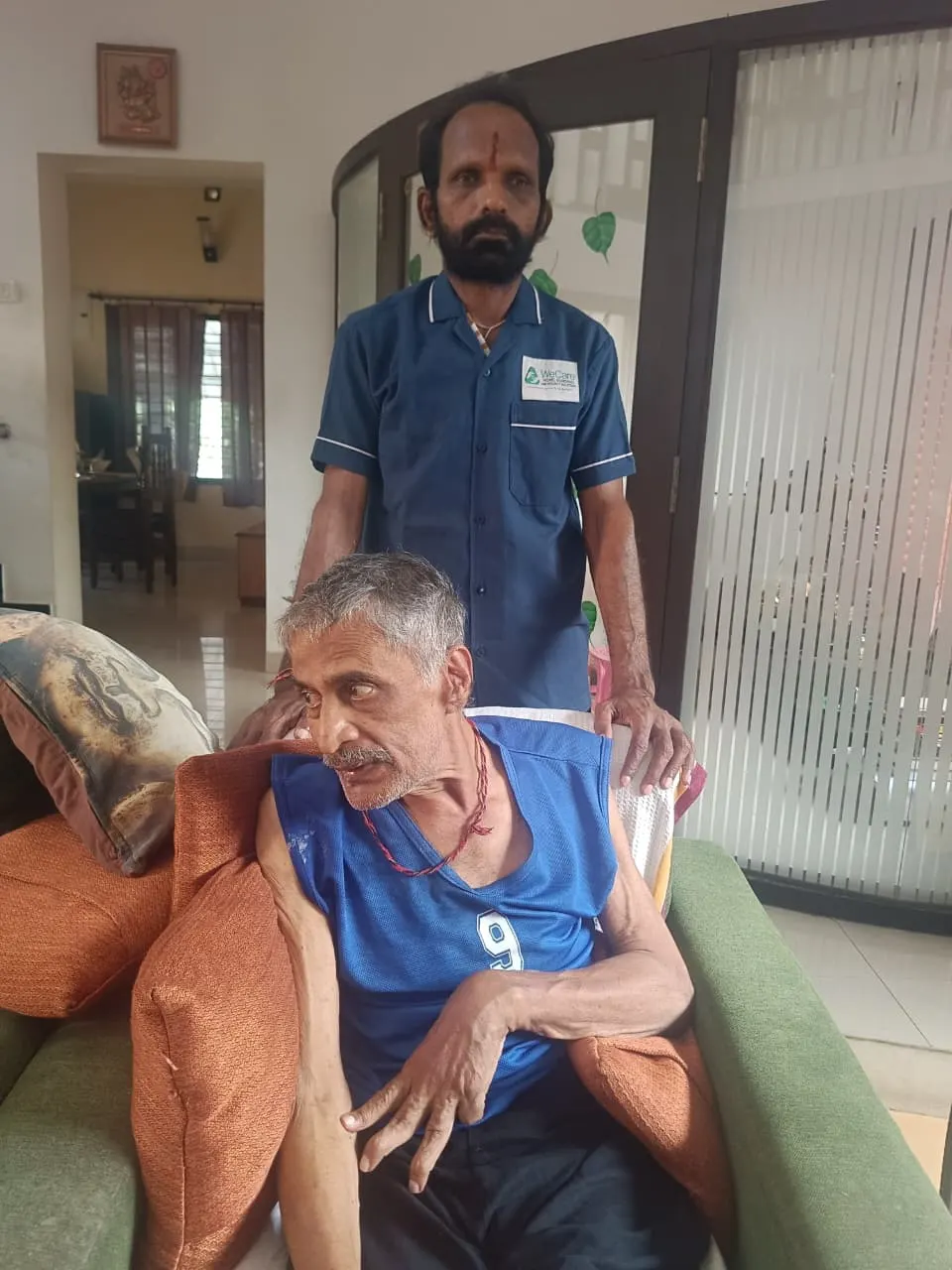
Stroke rehabilitation at home is a structured recovery programme delivered by a trained nurse in the patient’s own residence. After a stroke, patients often lose some degree of movement, speech, swallowing ability, or cognitive function. Rehabilitation aims to recover as much of that lost function as possible through daily exercises, retraining, and medical monitoring. WeCare24 provides professional stroke rehabilitation nursing across Mangalore, Bangalore, Mysore, Udupi, and Manipal.
Most stroke patients are discharged from hospital within one to two weeks, but recovery takes months of consistent, daily work. The hospital cannot keep patients for that long. However, without professional support at home, families struggle to maintain the exercise routines, medication schedules, and safety precautions that the rehabilitation plan calls for. A trained nurse bridges this gap by working with the patient every day, tracking progress, and reporting back to the treating doctor so the plan stays on track.
What Stroke Rehabilitation at Home Covers
- Mobility and balance exercises: Range-of-motion exercises for affected limbs, weight-bearing practice, gait training with walking aids, and balance exercises to reduce fall risk. The nurse follows the physiotherapist’s programme and adapts difficulty as the patient improves.
- Activities of daily living (ADL) retraining: Helping the patient relearn everyday tasks like bathing, dressing, toileting, grooming, and eating. The goal is to build back as much independence as the patient’s condition allows.
- Speech and swallowing support: For patients with aphasia (difficulty speaking or understanding words) or dysphagia (difficulty swallowing), the nurse carries out exercises prescribed by a speech-language pathologist and monitors swallowing safety during meals.
- Medication management: Administering blood thinners, antihypertensives, statins, and other post-stroke medications on schedule, with dose verification and side-effect monitoring.
- Blood pressure monitoring: Regular readings to track hypertension control, which is the single most important factor in preventing a second stroke. The nurse logs every reading for the doctor.
- Fall prevention: Assessing the home for hazards (loose rugs, poor lighting, slippery floors), recommending grab bars and non-slip mats, and supervising the patient during transfers and walking until they are stable enough to move safely.
- Skin and pressure sore prevention: For patients who are partially or fully immobile, regular repositioning, skin inspection, and mattress advice to prevent bedsores from developing. See our bedridden patient care services.
- Emotional and psychological support: Post-stroke depression affects up to one-third of stroke survivors. The nurse monitors mood changes, encourages participation in rehabilitation, and alerts the treating doctor if depressive symptoms appear.
Signs Your Family Member Needs Stroke Rehabilitation at Home
- The patient has been discharged from hospital after a stroke and has difficulty walking, using one side of the body, speaking, or swallowing.
- The hospital rehabilitation team has given a home exercise programme, but the family is not confident they can supervise it correctly every day.
- The patient has fallen at home since the stroke, or the family is worried about fall risk in the bathroom, bedroom, or stairways.
- Speech or swallowing has been affected, and the patient needs supervised feeding and regular oral exercises to prevent aspiration pneumonia.
- The patient is showing signs of frustration, withdrawal, or depression after the stroke, and needs structured daily engagement alongside medical monitoring.
- The treating doctor has recommended continued rehabilitation at home after the initial hospital stay, and the family needs professional nursing help to carry it out.
Hospital Rehabilitation vs Home Rehabilitation
| Factor | Hospital / Rehab Centre | Home Rehabilitation (WeCare24) |
|---|---|---|
| Environment | Clinical setting with fixed schedules and shared spaces | Patient recovers in familiar surroundings with family nearby |
| Session frequency | Scheduled therapy blocks, usually one to two sessions per day | Exercises woven into the patient’s daily routine throughout the day |
| Personalisation | Standardised protocols across many patients | Care plan adapted to the patient’s home layout, daily habits, and family involvement |
| Family involvement | Limited to visiting hours | Family trained and involved in daily exercises and care routines |
| Daily cost | Hospital bed charges plus rehabilitation therapy fees | Lower overall cost with no hospital overhead |
The Stroke Recovery Timeline
Stroke recovery follows a general pattern, though every patient’s experience is different. Understanding the phases helps families set realistic expectations:
- Acute phase (first 1 to 2 weeks): The patient is in hospital. Medical stabilisation is the priority. Early rehabilitation starts before discharge with simple exercises and positioning.
- Early recovery (weeks 2 to 12): This is when the brain recovers fastest. Consistent daily rehabilitation during this window gives the best results. A nurse at home keeps the exercise programme on track every day.
- Middle recovery (months 3 to 6): Progress may slow but continues with regular practice. The nurse adjusts the difficulty of exercises and focuses on the areas where the patient has the most room for improvement.
- Late recovery (6 months to 2 years): Smaller gains continue with persistence. Nursing visits may taper to weekly check-ins as the patient becomes more independent. The focus shifts to maintaining gains and preventing complications.
- Long-term management (ongoing): Some patients reach a plateau but still benefit from periodic nursing review to monitor blood pressure, medication compliance, and watch for signs of a second stroke.
For instance, research from the Indian Stroke Association and international studies consistently shows that patients who receive structured rehabilitation in the first three months recover more function than those who start later. Starting home rehabilitation promptly after hospital discharge is one of the most impactful decisions a family can make.
Preventing a Second Stroke
Around one in four stroke survivors has a second stroke within five years. As a result, our nurses monitor the key risk factors that contribute to recurrence:
- Blood pressure readings at every visit, with alerts to the doctor when readings are above target despite medication.
- Medication adherence for blood thinners (warfarin, aspirin, clopidogrel), antihypertensives, and statins, all of which reduce second stroke risk.
- Blood sugar monitoring for diabetic patients, since uncontrolled diabetes increases stroke recurrence risk. See our diabetes care at home service.
- Diet and hydration support, working with the family to follow the dietary guidelines given by the treating doctor.
- Activity and mobility maintenance, since immobility raises the risk of blood clots that can cause another stroke.
When to Call for Emergency Help
If any of the following happen at any time, call emergency services immediately. These signs may indicate a new stroke or serious complication:
- Sudden numbness or weakness in the face, arm, or leg, especially on one side of the body (new or worsening compared to the existing stroke effects).
- Sudden confusion, trouble speaking, or difficulty understanding simple sentences.
- Sudden trouble seeing in one or both eyes.
- Sudden severe headache with no known cause.
- Sudden trouble walking, dizziness, or loss of balance beyond the patient’s current baseline.
- Difficulty breathing, chest pain, or rapid irregular heartbeat.
The FAST test (Face drooping, Arm weakness, Speech difficulty, Time to call emergency) should be known by every family member. Our nurses review this with the family at the start of care and leave a printed reference sheet at the bedside.
What Affects the Stroke Rehabilitation Plan
The rehabilitation plan is built around each patient’s specific needs:
- The type of stroke (ischemic or hemorrhagic) and which area of the brain was affected.
- The severity of functional loss: partial weakness vs complete paralysis, mild speech difficulty vs complete aphasia.
- The patient’s age, overall health, and pre-stroke fitness level.
- Whether the patient has other conditions that affect recovery, such as diabetes, heart disease, or COPD
- The home layout and whether modifications are needed for safety (grab bars, ramps, bed rails).
- The family’s availability to assist with exercises and daily care between nursing visits.
We assess all of these factors during the initial home visit and build a plan that the treating doctor reviews. The plan is updated every two to four weeks based on the patient’s progress. To start, request a home assessment or check our FAQs page.
Physiotherapy and Movement Recovery at Home
After a stroke, one side of the body is often weak or stiff. Regular, guided movement helps the brain form new pathways, so therapy should start as soon as the doctor allows. Our team follows the plan set by the treating physician or physiotherapist and focuses on sitting balance, standing, transfers, and walking. You can also read about our physiotherapy at home service.
Short, frequent sessions usually work better than one long session, because tired muscles and a tired mind learn less. Families are shown simple exercises to repeat safely between visits, always within the limits the therapist sets.
Speech, Language, and Swallowing Support
Many stroke survivors struggle to speak, understand, or swallow. A speech and language therapist assesses these problems and sets targets. Our nurses support the plan by encouraging practice, giving the patient time to answer, and using pictures or gestures when words are hard to find.
Swallowing needs special care. Signs of trouble include coughing during meals, a wet or gurgling voice, and food pooling in the mouth. Please report these signs to the doctor straight away. Where a feeding tube is needed, our nurses can help with tube feeding care at home.
Relearning Daily Activities
Regaining independence is one of the biggest goals for survivors. Occupational therapy helps patients relearn tasks such as washing, dressing, eating, and using the toilet. Our caregivers encourage patients to do as much as they safely can, rather than doing everything for them. Simple aids, such as a built-up spoon, a long-handled sponge, or a shower stool, can make a big difference.
Fall Prevention and Home Safety
Weakness and poor balance raise the risk of falls, and a fall can set recovery back by weeks. We suggest these simple changes:
- Remove loose rugs, clutter, and wires from walking paths.
- Fit grab rails near the toilet and in the shower.
- Use non-slip footwear and mats.
- Keep the path to the bathroom well lit at night.
- Place everyday items within easy reach on the stronger side.
Emotional Recovery and Mood
A stroke changes more than the body. Many survivors feel frustrated, anxious, or low, and some experience sudden crying or irritability. These reactions are common and treatable. Our caregivers offer patience, routine, and encouragement, and they tell the doctor if low mood continues. Celebrating small gains, such as lifting an arm or saying a new word, helps motivation.
Nutrition for Stroke Recovery
A balanced diet supports healing and helps control blood pressure, blood sugar, and cholesterol. The doctor or dietitian may advise less salt, less fried food, and more vegetables, fruit, and whole grains. Patients with swallowing problems may need softer foods or thickened fluids. Those who also have diabetes can read about diabetes care at home.
Supporting Family Caregivers
Stroke care can be tiring for the whole family. We teach relatives how to help the patient move safely, protect the weak arm, and spot warning signs. We also arrange visits that give family members time to rest. A rested caregiver is more patient, and the patient benefits from that calm.
Questions to Ask the Doctor or Therapist
Clear answers make the recovery plan easier to follow. It helps to ask about the following:
- The type of stroke and the parts of the body affected.
- Which therapies are needed and how often.
- Which exercises are safe to practise at home.
- What medicines to give and which side effects to watch for.
- When the next review or scan is due.
Combined Care and Service Areas
Stroke recovery often needs more than one type of support. Patients with lasting weakness can explore paralysis care at home and bedridden patient care, and those with heart problems can read about cardiac care at home.
WeCare24 provides stroke rehabilitation in Mangalore, Bangalore, Mysore, Udupi, and Manipal. You can browse our home nursing services in Mangalore or home nursing services in Bangalore, or book a consultation to plan a recovery schedule.
Frequently Asked Questions
What does stroke rehabilitation at home involve?
It involves physiotherapy for mobility and balance, speech and swallowing support, daily activity retraining (bathing, dressing, eating), medication management, blood pressure monitoring, fall prevention, and emotional support. A nurse coordinates all of this based on the treating doctor’s rehabilitation plan.
How soon after a stroke should home rehabilitation begin?
Most doctors recommend starting rehabilitation as soon as the patient is medically stable, often within the first week or two after hospital discharge. Early and consistent rehabilitation gives the best chance of recovering lost function.
Can a stroke patient recover fully at home?
Recovery varies by stroke severity and the area of the brain affected. Some patients regain most or all function with consistent rehabilitation, while others make partial recovery. Professional nursing support maximises the patient’s progress at every stage.
Do your nurses handle both physical and speech rehabilitation?
Our nurses manage physical rehabilitation tasks like mobility exercises, transfers, and daily activity support. For specialised speech therapy, we coordinate with licensed speech-language pathologists who can visit the home or guide the care plan remotely.
Is stroke rehabilitation at home covered by insurance?
Coverage varies by insurer and policy type. We can provide invoices and documentation in the format most insurers require. We recommend checking with your insurance provider about home nursing rehabilitation benefits before starting.
How long does stroke rehabilitation take?
The most significant recovery typically happens in the first three to six months after a stroke, but improvements can continue for a year or more. The care plan is adjusted as the patient progresses, and nursing visit frequency tapers as independence increases.
What equipment is needed for stroke rehabilitation at home?
Common items include a walker or wheelchair, grab bars for the bathroom, a hospital-style bed (if needed), resistance bands for exercises, and non-slip mats. We assess the home and recommend only what is necessary for the patient’s current stage.
Is stroke rehabilitation at home available in Bangalore and Mysore?
Yes. Stroke rehabilitation with trained nursing support is available across Mangalore, Bangalore, Mysore, Udupi, and Manipal.
Related Services
- Wound Care at Home
- Kidney & Dialysis Care at Home
- Physiotherapy Services at Home
- Bedridden Patient Care
- Cardiac Care at Home
- Diabetes Care at Home
- Palliative Care at Home
- Oxygen Therapy at Home
- Home Nursing Services in Mangalore
- Home Nursing Services in Bangalore
- WeCare24 Home Nursing FAQs
- Paralysis Care at Home
- Fracture Recovery Care at Home
- Tube Feeding Care at Home
- Pressure Sore (Bedsore) Care at Home
