
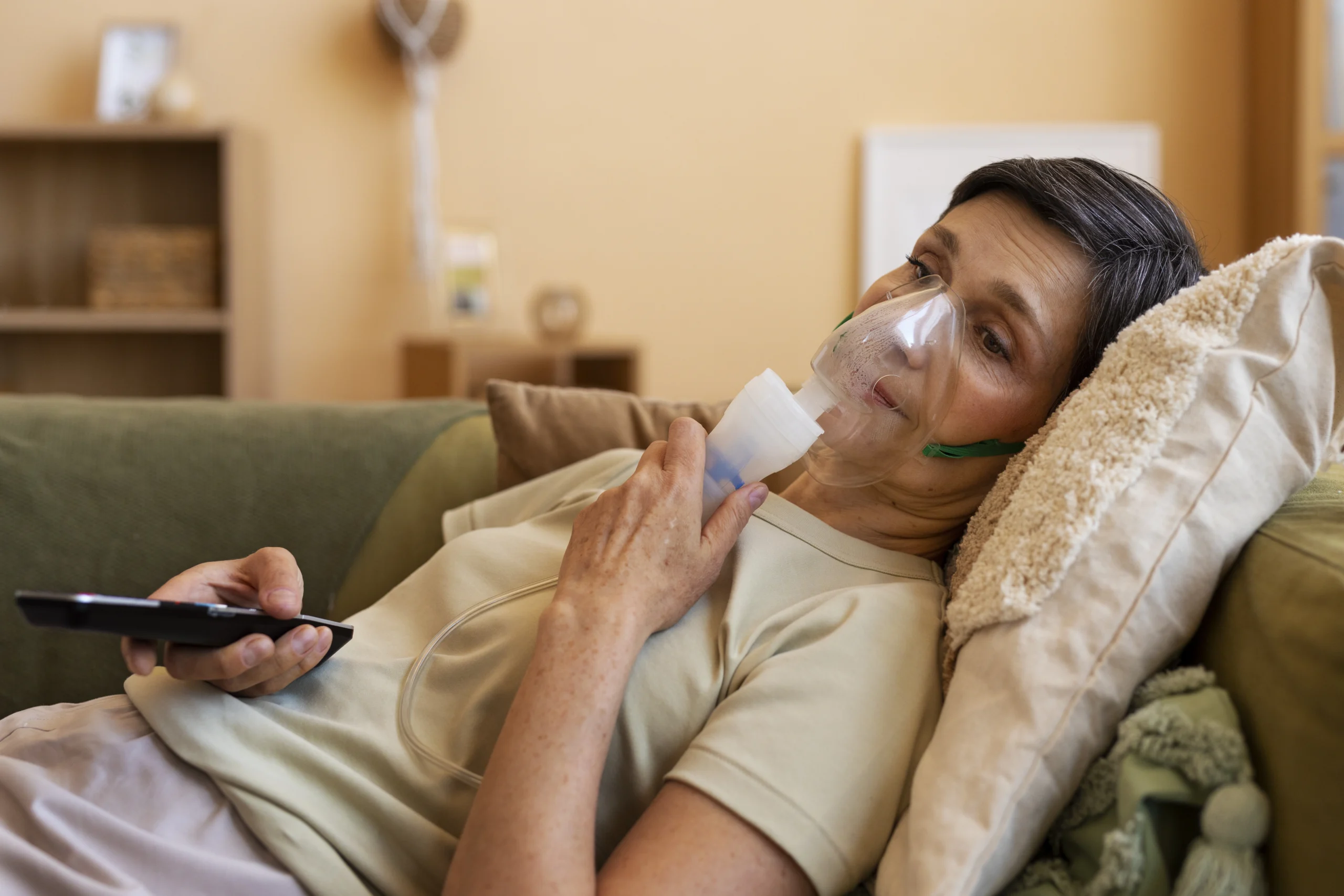
COPD and respiratory care at home provides ongoing nursing support for patients with chronic obstructive pulmonary disease and other long-term breathing conditions, including oxygen therapy management, nebulization, breathing exercises, health monitoring, and flare-up recognition. All care is delivered in the patient’s own home under the treating doctor’s guidance. WeCare24 provides this service across Mangalore, Bangalore, Mysore, Udupi, and Manipal.
COPD is a progressive condition that requires consistent management to keep symptoms under control, reduce hospitalisations, and maintain the best possible quality of life. For many patients, this ongoing care is more practical and comfortable at home than through repeated clinic visits, especially for elderly patients with limited mobility.
Understanding COPD: What It Is and How It Progresses
Chronic obstructive pulmonary disease (COPD) is a group of lung conditions that cause breathing difficulty by blocking airflow. The two most common forms are chronic bronchitis (inflammation and narrowing of the airways with excess mucus) and emphysema (damage to the air sacs in the lungs). Most patients have a combination of both.
COPD progresses through stages, from mild (occasional breathlessness during physical activity) to very severe (breathlessness at rest, frequent exacerbations, and significant limitations on daily life). The stage of the disease determines how much support the patient needs at home. Early-stage patients may only need periodic check-ins and nebulization support, while advanced-stage patients often need daily nursing visits, oxygen management, and close monitoring for flare-ups.
In India, COPD is one of the leading causes of chronic illness, particularly among older adults and those with a history of smoking or prolonged exposure to cooking smoke, industrial dust, or air pollution. Many patients are diagnosed only after repeated hospital admissions for breathing difficulty, by which point the disease has already progressed. Early, consistent home management can slow that progression and reduce the frequency of emergency hospitalisations.
What Home-Based COPD Care Includes
- Oxygen therapy management: monitoring flow rates, duration, and equipment safety as prescribed by the doctor
- Nebulization sessions: administering prescribed bronchodilators and other respiratory medications
- Breathing exercises and pulmonary rehabilitation support: guided by trained staff to improve lung function over time
- Health monitoring: tracking oxygen saturation, respiratory rate, heart rate, and blood pressure
- Medication adherence support: making sure the patient follows the prescribed medication schedule correctly
- Flare-up recognition and escalation: identifying early signs of an exacerbation and coordinating with the treating doctor
- Family education: teaching family members to recognise warning signs and provide basic support between nursing visits
Signs You May Need Home Respiratory Care
- Frequent breathlessness that limits daily activities like walking or climbing stairs
- Repeated hospital admissions for respiratory flare-ups or COPD exacerbations
- The patient is on long-term oxygen therapy and needs help managing the equipment safely
- Prescribed nebulization or medication schedule is difficult to maintain without clinical support
- The treating doctor has recommended ongoing monitoring to prevent hospitalisations
If you or a family member is dealing with any of these, book a consultation so we can assess the situation and recommend the right level of support. For patients who also need ventilator support or tracheostomy care, those can be combined into a single plan.
Equipment Needed for Home COPD Care
The right equipment at home makes a significant difference in how well COPD is managed between hospital visits. Depending on the treating doctor’s prescription, a patient may need some or all of the following:
- Pulse oximeter: a small clip-on device that measures blood oxygen levels (SpO2). This is the most basic and most important monitoring tool for any COPD patient at home. The nurse checks SpO2 at every visit, and family members can also be trained to use it.
- Oxygen concentrator or cylinder: for patients on prescribed supplemental oxygen. The concentrator filters room air and delivers concentrated oxygen through a nasal cannula. Our nursing staff manage flow rate settings and safety around the equipment.
- Nebulizer machine: used to deliver prescribed bronchodilators (like salbutamol or ipratropium) as a fine mist that the patient breathes in. In addition, this is especially useful for patients who have difficulty using handheld inhalers.
- Blood pressure monitor: COPD often coexists with heart disease, and blood pressure monitoring helps catch related issues early.
- Suction machine: for patients who produce excess mucus and need help clearing their airways, especially after tracheostomy or during severe bronchitis episodes.
WeCare24 helps families source and set up this equipment from verified medical suppliers. Our nurses check equipment function and safety at every visit and coordinate with the supplier for maintenance or replacement when needed.
Hospital-Based vs Home-Based COPD Management
| Setting | Typical Patient | Focus |
|---|---|---|
| Hospital (acute) | Severe exacerbation, acute respiratory distress | Stabilisation, IV medications, intensive monitoring |
| Hospital (pulmonary rehab) | Post-exacerbation, building lung capacity | Structured exercise and education programme |
| Home-based care | Stable COPD, doctor-approved for home management | Ongoing monitoring, oxygen management, nebulization, flare-up prevention |
When to Go to the Hospital Instead of Continuing Home Care
Home care is for stable, ongoing management. There are situations where the patient needs emergency hospital care, and both the nursing team and the family need to recognise these:
- Severe breathlessness that does not improve after using the prescribed rescue inhaler or nebulization
- Blue or grey discolouration of the lips, fingertips, or nail beds (cyanosis), which indicates dangerously low oxygen
- Confusion, drowsiness, or difficulty staying awake, which can indicate CO2 buildup in the blood
- Very high respiratory rate (more than 30 breaths per minute at rest) or very low rate with shallow breathing
- Chest pain, especially if combined with breathlessness and rapid heart rate
- High fever with coloured or bloody sputum, suggesting a chest infection that may need IV antibiotics
WeCare24 nurses are trained to recognise these warning signs and will coordinate with the treating doctor and arrange hospital transfer when needed. Part of the family education we provide covers these same signs so that someone at home can act quickly even between nursing visits.
Common Respiratory Conditions We Support at Home
- COPD (chronic obstructive pulmonary disease): the most common reason for long-term home respiratory support
- Chronic bronchitis: ongoing airway inflammation requiring regular nebulization and monitoring
- Emphysema: progressive lung damage needing oxygen therapy and careful activity management
- Bronchiectasis: recurring chest infections with mucus clearance support
- Post-COVID respiratory recovery: patients with lingering breathing difficulties after severe COVID-19
Many of these conditions overlap with the services covered under our intensive care and palliative care programmes. For patients recovering from surgery, our post-surgery care service may also be relevant.
Tips for Family Caregivers
Family members play a major role in managing COPD at home between nursing visits. Here are practical things you can do:
- Learn to use the pulse oximeter: check SpO2 at least twice a day and note any readings below the threshold your doctor has set (usually below 92%)
- Keep a symptom diary: note any changes in breathing difficulty, sputum colour, coughing frequency, or activity tolerance. This helps the nurse and doctor spot patterns early.
- Follow the medication schedule: set alarms or reminders for inhalers, nebulization, and oral medications. Skipped doses are one of the most common causes of flare-ups.
- Keep the home environment clean: dust, strong fumes, incense smoke, and cooking smoke can trigger breathing difficulty. Use exhaust fans and avoid burning anything near the patient.
- Encourage gentle activity: unless the doctor says otherwise, short walks and seated exercises help maintain lung function and overall strength. Prolonged bed rest weakens the respiratory muscles.
- Know when to call for help: the warning signs listed above should be printed and kept in a visible place at home. Do not wait for the next nursing visit if any of them appear.
Daily Routine for a COPD Patient at Home
Managing COPD at home is about building a daily routine that keeps symptoms stable and catches problems early. A typical day for a patient on home respiratory care looks something like this:
- Morning: check SpO2 with pulse oximeter, take prescribed morning medications and inhalers, light breathing exercises (pursed-lip breathing or diaphragmatic breathing for 10 to 15 minutes)
- Mid-morning: nebulization session if prescribed, followed by gentle activity like a short walk inside the house or in the balcony
- Afternoon: rest period (COPD patients tire easily and need planned rest, not just sleep). If the nurse visits, blood pressure and pulse are checked and documented during this window.
- Evening: second round of prescribed inhalers or nebulization, another SpO2 check, light seated exercises if the patient is up to it
- Night: final medications, oxygen therapy setup if the patient uses nighttime supplemental oxygen, bed positioned at a slight incline (using pillows or a wedge) to help breathing during sleep
This routine is adjusted based on the patient’s stage of COPD, current condition, and what the treating doctor has prescribed. The WeCare24 nurse works with the family to build a schedule that fits the household’s daily rhythm.
What Affects the COPD Care Plan
The right plan depends on the patient’s specific condition and the treating doctor’s recommendations:
- Severity and stage of COPD or respiratory condition
- Whether the patient is on long-term oxygen therapy
- Frequency of nebulization or other treatments prescribed
- Any co-existing conditions such as heart disease or diabetes that affect respiratory management
- The patient’s mobility and ability to manage aspects of care independently
We recommend a consultation so we can understand the full picture and build the right plan. Book a consultation or visit our FAQs page for general questions about our services. Patients who also need physiotherapy or cardiac care can have those included in the same plan.
How We Set Up Home Respiratory Care
- Doctor coordination: we review the treating doctor’s prescription, test results, and management plan
- Nurse assignment: a nurse with respiratory care experience is assigned to the patient
- Equipment check: oxygen concentrator, nebulizer, pulse oximeter, and other equipment are confirmed and tested
- Visiting schedule: daily, alternate-day, or weekly visits based on the care plan
- Ongoing monitoring: blood pressure and pulse and symptoms are tracked at every visit, with any concern escalated to the doctor
Frequently Asked Questions
What does home-based COPD care include?
It includes oxygen therapy management, nebulization, breathing exercises guided by a physiotherapist or nurse, health monitoring, medication adherence support, and education for the patient and family on managing flare-ups and recognising warning signs.
Is home care suitable for severe COPD?
For stable patients whose treating doctor has approved home management, yes. Patients in acute distress or experiencing a severe exacerbation need hospital care first. Home care is appropriate once the patient is stable and the doctor has set a clear management plan.
Do you provide oxygen equipment for home use?
We coordinate with medical equipment suppliers to arrange oxygen concentrators or cylinders as prescribed by the treating doctor. Our nursing staff manage the daily use, flow settings, and safety around oxygen equipment at home.
Can COPD care be combined with other home nursing services?
Yes. Many COPD patients also need general nursing care, physiotherapy, or post-hospitalisation monitoring, and we build a single combined care plan covering all needs.
How often does a nurse visit for COPD care?
This depends on the patient’s condition and the doctor’s recommendation. It can range from daily visits during a recovery period to weekly check-ins for stable, long-term management.
Is this service available outside Mangalore?
Yes. COPD and respiratory care at home is available across Mangalore, Bangalore, Mysore, Udupi, and Manipal.
What equipment is needed at home for COPD care?
At minimum, a pulse oximeter for oxygen level monitoring. Depending on the doctor’s prescription, an oxygen concentrator or cylinder, a nebulizer machine, and a blood pressure monitor may also be needed. Our team helps arrange and set up the required equipment.
When should a COPD patient go to the hospital instead of continuing home care?
If the patient shows signs of severe breathlessness that does not respond to medication, blue lips or fingertips, confusion, or a very high or very low respiratory rate, they need emergency hospital care. Our nurses are trained to recognise these signs and will coordinate the transfer.
