
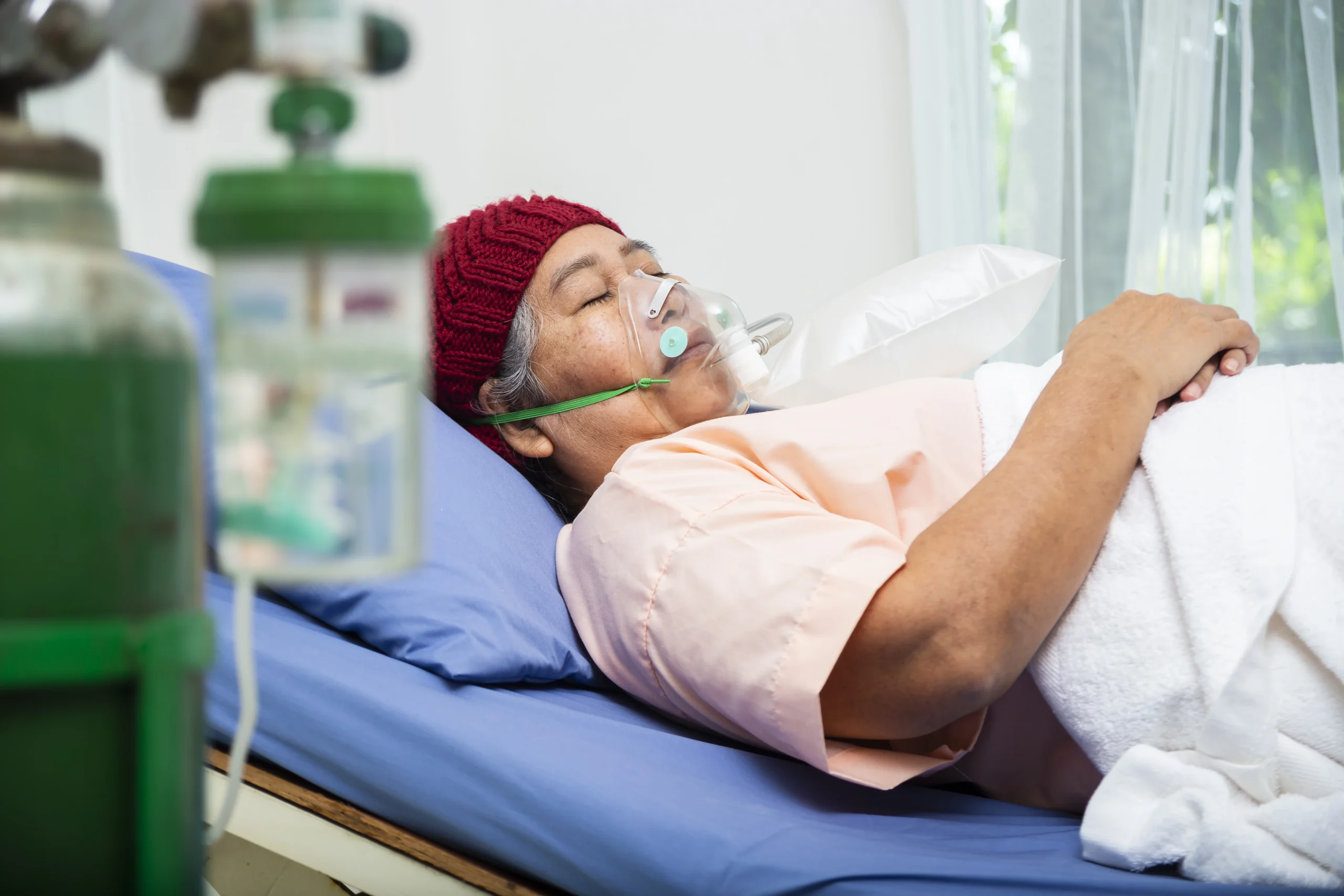
Oxygen therapy at home means providing supplemental oxygen to a patient in their own residence, using a portable oxygen concentrator, oxygen cylinder, or similar device prescribed by their doctor. A trained nurse manages the equipment, monitors blood oxygen levels (SpO2). makes sure the patient receives the correct flow rate at all times. WeCare24 provides professional home oxygen therapy with qualified nursing staff across Mangalore, Bangalore, Mysore, Udupi. Manipal.
Patients recovering from pneumonia, living with COPD, or managing post-COVID lung complications often need oxygen support that continues well beyond the hospital stay. Managing oxygen equipment at home without trained help can be stressful and risky for the family. A qualified nurse takes that burden off, keeps the therapy on track, watches for early signs of trouble like desaturation or equipment malfunction. reports back to the treating doctor with regular clinical updates.
What Oxygen Therapy at Home Covers
- Oxygen concentrator or cylinder setup: Installation, positioning. daily management of the prescribed oxygen delivery equipment at the patient’s bedside or living area
- Flow rate monitoring: Checking and adjusting the oxygen flow rate (litres per minute) as prescribed by the treating doctor, with documentation at every reading
- SpO2 tracking: Regular pulse oximeter readings to monitor blood oxygen saturation, with immediate alerts to the doctor when levels fall outside the target range
- Nasal cannula and mask management: Fitting, cleaning. replacing nasal cannulae or oxygen masks to keep delivery comfortable and free of blockages
- Cylinder refill coordination: Tracking remaining oxygen levels in cylinders and scheduling refills or replacements before the supply runs low
- Night-time monitoring: Overnight oxygen supervision for patients who need continuous supplemental oxygen. This includes regular position checks
- Safety protocols: Fire prevention measures, ventilation checks. equipment inspection to keep the home environment safe around active oxygen delivery
- Health monitoring: Recording heart rate, respiratory rate, blood pressure, and temperature alongside SpO2 to give the doctor a complete clinical picture
Signs Your Family Member May Need Home Oxygen Therapy
- The treating doctor has prescribed supplemental oxygen after a hospital stay or outpatient lung function assessment
- SpO2 readings consistently drop below 92% at rest or during light activity like walking across the room
- The patient experiences breathlessness during routine activities such as eating, bathing, or using the bathroom
- A confirmed diagnosis of COPD, pulmonary fibrosis, interstitial lung disease, or chronic heart failure with respiratory involvement
- Recovery from severe pneumonia, COVID-19, or complications following lung or heart surgery
- The family feels unsure about how to operate oxygen equipment, handle a desaturation episode, or manage safety at home
Hospital Oxygen Management vs Home Oxygen Therapy
| Factor | Hospital | Home Oxygen (WeCare24) |
|---|---|---|
| Environment | Clinical ward with shared space and fixed schedules | Patient’s own home, familiar surroundings, flexible daily routine |
| Nurse availability | Nurses shared across multiple patients on the ward | One nurse assigned to the patient for the full shift |
| Equipment | Centralised piped oxygen or large cylinders | Portable concentrator or home-sized cylinder suited to the room layout |
| Daily cost | Hospital bed charge plus oxygen and nursing fees | Lower daily cost with no hospital overhead |
| Infection risk | Higher exposure to hospital-acquired infections | Lower exposure in a controlled home setting |
Conditions That Commonly Need Home Oxygen
Supplemental oxygen at home is prescribed for a range of conditions where the lungs cannot maintain adequate blood oxygen levels on their own:
- Chronic Obstructive Pulmonary Disease (COPD): Long-term oxygen therapy is one of the most common treatments for advanced COPD. For related support, see our COPD and respiratory care at home page
- Pulmonary fibrosis and interstitial lung disease: Progressive scarring of lung tissue reduces oxygen exchange, often requiring supplemental oxygen during activity and sleep
- Post-COVID lung complications: Patients discharged after severe COVID-19 may need weeks or months of oxygen support during recovery at home
- Congestive heart failure: When the heart cannot pump blood efficiently, oxygen levels drop and supplemental support helps. Many of these patients also benefit from cardiac care at home
- Post-surgical recovery: Patients recovering from lung or heart surgery may need temporary oxygen until breathing stabilises. See our post-surgery care services
- Advanced cancer with respiratory involvement: Tumours affecting the lungs or chest can impair breathing, and oxygen therapy helps manage comfort alongside cancer care at home or palliative care
- Severe pneumonia recovery: Patients discharged from hospital after pneumonia sometimes still need supplemental oxygen during the first few weeks of recovery
- Neuromuscular conditions: Diseases like muscular dystrophy, motor neurone disease (ALS), or advanced Parkinson’s can weaken the breathing muscles, requiring supplemental oxygen alongside other respiratory support
- Obesity hypoventilation syndrome: Severely overweight patients whose breathing is too shallow to maintain adequate oxygen levels. This is particularly true during sleep
In Karnataka alone, hospitals discharge hundreds of patients each month who still need supplemental oxygen at home. Many of these patients live in areas where daily trips to a clinic for oxygen are not practical, and family members are not trained to operate the equipment safely. Professional home oxygen therapy fills this gap by bringing the clinical standard of monitoring and care into the patient’s own home, with a trained nurse managing the equipment and reporting back to the doctor.
Oxygen Safety at Home
Oxygen supports combustion. Anything that can burn will burn faster and hotter near an active oxygen source. Safety is not optional when oxygen equipment is running in the home,. Additionally, our nurses follow a strict checklist at every visit.
- No open flames, lit candles, incense sticks, or smoking anywhere near the oxygen equipment or the patient
- Cooking areas are kept at least 3 metres from the active oxygen source
- Electrical equipment near the patient is inspected for frayed wires or loose connections
- Oil-based lotions, petroleum jelly, and alcohol-based hand sanitisers are kept away from the nasal cannula and mask area
- The room where oxygen is used has proper ventilation, with at least one window or vent
- A fire extinguisher is recommended within reach,. We help the family pick the right type
- The oxygen concentrator sits on a flat, stable surface away from curtains, bedding, and other flammable material
We also train the patient’s family on these safety points so they can maintain a safe environment between nursing visits. Families receive a printed safety checklist to keep near the equipment.
When to Call for Emergency Help
Even with professional nursing support, families should know which signs need immediate medical attention. If any of the following occur between nursing visits, contact the treating doctor or call emergency services right away:
- SpO2 drops below 88% and does not recover after adjusting the nasal cannula or increasing flow as previously instructed by the doctor
- The patient develops sudden, severe breathlessness that does not improve with rest and oxygen
- Bluish discolouration (cyanosis) appears on the lips, fingertips, or earlobes
- The patient becomes confused, drowsy, or difficult to wake while on oxygen
- Chest pain, rapid or irregular heartbeat, or heavy sweating occurs alongside breathing difficulty
- The oxygen equipment malfunctions (concentrator alarm, empty cylinder with no backup). The patient is oxygen-dependent
Our nurses leave a written emergency contact sheet with the family at the start of care, listing the doctor’s number, the nearest hospital,. The WeCare24 coordination desk. In between visits, we are reachable by phone for guidance on whether a situation needs the emergency room or can wait for the next scheduled visit.
What Affects the Oxygen Therapy Plan
No two patients need the same oxygen setup. The right plan depends on:
- The prescribed flow rate (litres per minute) and target SpO2 range set by the treating doctor
- How many hours per day the patient needs supplemental oxygen, from night-only to round-the-clock
- Whether a portable concentrator or cylinder is more practical given the home layout and electrical supply
- The patient’s mobility and whether they need to move between rooms while receiving oxygen
- Whether the patient also needs nebulization therapy or ventilator support alongside oxygen
- The family’s ability to handle basic equipment tasks (replacing cannulae, reading the oximeter) between nursing visits
We review these factors during the initial home assessment and adjust the plan as the patient’s condition changes. You can request a home assessment or check our FAQs page for details on how we work.
How We Set Up Oxygen Therapy at Home
- Doctor’s prescription review: We begin with the treating doctor’s oxygen prescription. This includes the flow rate, duration, and target SpO2 range. No oxygen is administered without a valid medical prescription
- Equipment arrangement: Based on the prescription. The home setup, we coordinate with medical equipment suppliers to deliver the right concentrator or cylinder,. We also provide cannulae, masks,. A pulse oximeter
- Home safety assessment: A nurse visits the home to check ventilation, electrical outlets, fire safety,. The best position for the equipment. Any hazards are identified and resolved before therapy starts
- Nurse deployment and family training: A trained nurse is assigned to manage the oxygen therapy during each shift. The nurse also trains the family on basic monitoring, safety rules, and when to call for emergency help
- Ongoing monitoring and doctor updates: The nurse records SpO2, blood pressure, pulse, and temperature, and equipment status at every visit. Reports are shared with the treating doctor so the prescription can be adjusted when needed
Frequently Asked Questions
What is home oxygen therapy?
Home oxygen therapy is the delivery of supplemental oxygen to a patient in their own residence using a portable oxygen concentrator, cylinder, or similar device, as prescribed by a doctor. A trained nurse manages the equipment, monitors blood oxygen levels, and adjusts the setup as needed.
Is it safe to use oxygen equipment at home?
Yes, with proper safety measures in place. Oxygen supports combustion, so there must be no open flames, smoking, or unventilated cooking near the equipment. Our nurses set up the room, train the family on fire safety rules, and check the setup at every visit.
What equipment is needed for home oxygen therapy?
The typical setup includes an oxygen concentrator or cylinder, a nasal cannula or face mask for delivery, a pulse oximeter for SpO2 monitoring, and connecting tubing. We coordinate with medical equipment suppliers to arrange everything as prescribed.
How long will the patient need oxygen therapy?
This depends on the underlying condition. The treating doctor’s assessment. Some patients need oxygen for a few weeks during recovery, while others with chronic conditions like COPD or pulmonary fibrosis may need long-term or lifelong supplemental oxygen.
Can the patient move around the house while on oxygen?
Yes. Portable concentrators and longer tubing allow movement within the home. Our nurses help arrange the equipment placement so the patient can move safely between rooms and use the bathroom without disconnecting.
Do you provide the oxygen equipment?
We coordinate with medical equipment suppliers to arrange concentrators, cylinders, nasal cannulae, and pulse oximeters as prescribed by the doctor. Our nursing staff handle the daily operation, maintenance, and safety checks.
How often does a nurse visit for oxygen therapy?
Visit frequency depends on the patient’s stability. Newly discharged patients may need daily nursing visits, while stable long-term users typically have weekly or twice-weekly check-ins. The treating doctor’s recommendation guides the schedule.
Is home oxygen therapy available outside Mangalore?
Yes. Home oxygen therapy with trained nursing support is available across Mangalore, Bangalore, Mysore, Udupi, and Manipal.
