
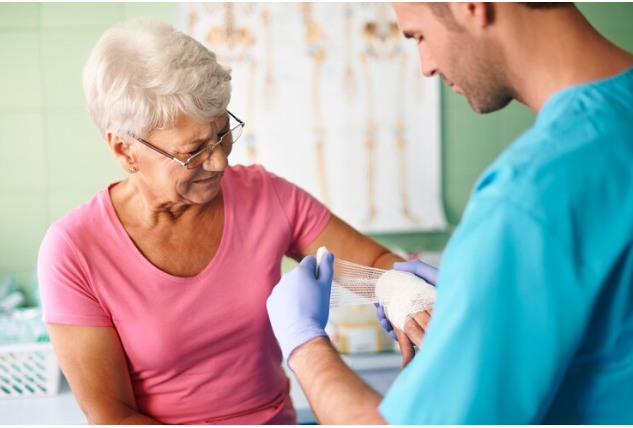
Wound care at home means a trained nurse visiting the patient’s residence to clean, dress, and monitor wounds using sterile technique. This covers surgical wounds after hospital discharge, diabetic foot ulcers, pressure sores from prolonged bed rest, traumatic injuries, and chronic leg ulcers that need regular professional attention. WeCare24 sends trained nurses for wound care visits across Mangalore, Bangalore, Mysore, Udupi, and Manipal.
However, a wound that is not cleaned and dressed properly at the right intervals can become infected, slow down healing, or lead to hospital readmission. Many patients discharged after surgery or living with chronic wounds find it difficult to visit a clinic every day or two for dressing changes. A nurse coming to the home solves this problem. The wound gets the same standard of sterile care it would receive in a hospital dressing room, but the patient stays comfortable in familiar surroundings without the stress and cost of repeated hospital trips.
What Wound Care at Home Covers
- Wound assessment: The nurse examines the wound at every visit, measuring size, checking for signs of infection, noting colour and discharge, and comparing progress against previous visits.
- Sterile wound cleaning: Using prescribed cleaning solutions to irrigate and debride the wound bed, removing dead tissue, dried blood, and debris without damaging new tissue growth.
- Dressing application: Applying the right type of dressing for the wound stage: dry gauze for clean surgical wounds, foam or hydrocolloid for moderate exudate, alginate for heavily draining wounds, and specialised silver dressings when infection control is needed.
- Drain and suture management: Monitoring surgical drains for output volume and colour, and assessing suture or staple sites for signs of separation, infection, or delayed healing.
- Diabetic foot ulcer care: Regular foot inspection, ulcer cleaning, offloading guidance, and close monitoring to prevent the wound from worsening. For full diabetes nursing support, see our diabetes care at home page.
- Pressure sore (bedsore) treatment: Cleaning and dressing pressure ulcers, repositioning the patient to relieve pressure points, and advising the family on mattress selection and turning schedules. See our bedridden patient care services.
- Wound photography and reporting: With the patient’s consent, taking dated photographs of the wound to track healing progress and share updates with the treating doctor.
- Infection monitoring: Watching for red flags like spreading redness, warmth, swelling, increased pain, pus, foul smell, or fever, and escalating to the doctor immediately when any appear.
Signs Your Family Member Needs Professional Wound Care at Home
- The patient has been discharged from hospital with a surgical wound that needs daily or alternate-day dressing changes, and the family is not confident doing it themselves.
- A diabetic foot ulcer is not healing despite home remedies, and the wound is getting larger or producing more discharge.
- A bedridden family member has developed pressure sores on the back, hips, heels, or tailbone, and the sores are deepening or becoming painful.
- The wound shows signs of infection: increasing redness, swelling, warmth around the edges, pus or cloudy drainage, a bad smell, or the patient has developed a fever.
- The patient has a chronic venous leg ulcer or arterial ulcer that has not responded to over-the-counter dressings and needs specialised wound care products.
- The family needs guidance on how to keep the wound clean and dry between nursing visits, especially for patients who are immobile or incontinent.
Hospital Wound Care vs Home Wound Care
| Factor | Hospital / Clinic Visits | Home Wound Care (WeCare24) |
|---|---|---|
| Patient comfort | Travel to the clinic each time, wait in queue, return home after dressing | Nurse visits the patient at home; no travel needed |
| Infection exposure | Waiting rooms carry risk of contact with other infections | Clean home environment with lower cross-infection risk |
| Sterile technique | Clinical dressing room with full supplies | Nurse brings sterile kits and follows the same clinical protocols |
| Continuity | Different nurse or doctor may handle the wound each visit | Same nurse assigned, who knows the wound history and progression |
| Cost per visit | Hospital charges plus transport costs each trip | Flat nursing visit fee with no transport or hospital overhead |
Types of Wounds We Manage at Home
Our nursing staff handle a wide range of wound types, each with its own cleaning, dressing, and monitoring requirements:
- Post-surgical wounds: Incision sites from abdominal surgery, orthopaedic procedures, cardiac surgery, or any operation that requires ongoing dressing changes and suture or staple monitoring after discharge.
- Diabetic foot ulcers: One of the most common chronic wound types in India. Poor blood sugar control slows healing, and nerve damage means the patient may not feel the wound getting worse. Regular nursing visits catch deterioration early.
- Pressure sores (bedsores): Categorised from Stage 1 (redness that does not fade) to Stage 4 (deep tissue damage). Bedridden patients are at highest risk, and proper wound care combined with repositioning is the standard treatment.
- Venous leg ulcers: Caused by poor blood circulation in the legs, these wounds often appear near the ankle and can take months to heal without proper compression therapy and regular wound care.
- Burn wounds: Second-degree burns and healing third-degree burns that have passed the acute hospital phase still need regular cleaning, specialised dressings, and infection monitoring during recovery at home.
- Traumatic wounds: Cuts, lacerations, and crush injuries that were treated in the emergency room but still need follow-up wound care, suture monitoring, and eventual suture removal.
- Drain site management: Surgical drains left in place after operations need daily monitoring for output, blockages, and infection at the insertion site until the doctor orders removal.
In India, wound care is one of the most requested nursing services for home visits. For example, post-surgical patients alone account for a large share of hospital readmissions due to wound infections that developed after discharge. Regular professional wound care at home has been shown to reduce infection rates and speed up healing by catching problems in the first 24 to 48 hours rather than after they become serious.
The Wound Healing Process
Understanding how wounds heal helps families know what to expect at each stage. A nurse tracks these phases at every visit and adjusts the dressing plan accordingly:
- Hemostasis (first minutes to hours): The body stops bleeding by forming a clot. Surgical wounds are typically past this phase at discharge.
- Inflammatory phase (days 1 to 5): Redness, warmth, and mild swelling are normal as the body fights bacteria and clears damaged cells. This is NOT the same as infection, though a nurse knows the difference.
- Proliferative phase (days 5 to 21): New tissue fills the wound bed, and the wound starts to shrink. The dressing type may change during this phase to support tissue growth.
- Remodelling phase (3 weeks to 2 years): The new tissue strengthens and matures. The wound may look healed on the surface but remain fragile underneath. Nursing visits taper off during this phase.
In contrast, chronic wounds like diabetic ulcers and pressure sores often get stuck in the inflammatory phase, which is why they do not heal without professional intervention. A nurse identifies when a wound is stalled, adjusts the cleaning and dressing approach, and reports to the doctor for possible changes in the treatment plan.
When to Call for Emergency Help
Most wound care follows a predictable schedule, but certain signs need immediate attention. Contact the treating doctor or go to the nearest emergency room if:
- Bright red bleeding that soaks through the dressing and does not stop with gentle pressure within 10 minutes.
- Sudden increase in wound size, depth, or exposure of underlying tissue (muscle, bone, or tendon becoming visible).
- Spreading redness that moves outward from the wound edge, especially with red streaks running up the limb (possible cellulitis or lymphangitis).
- High fever (above 101F / 38.3C) combined with increased wound pain, which may indicate the infection has entered the bloodstream.
- Foul-smelling green or brown discharge from the wound, suggesting serious bacterial contamination.
- The patient becomes confused, unusually drowsy, or develops chills and rapid heartbeat alongside wound symptoms (signs of sepsis).
Our nurses provide the family with a written wound emergency sheet at the start of care. Between visits, the WeCare24 coordination desk is available by phone for guidance on whether the situation needs an ER visit or can wait for the next scheduled nursing visit.
What Affects the Wound Care Plan
Every wound is different. The care plan is built around these factors:
- The wound type, size, depth, and location on the body.
- Whether the wound is clean or infected, and what organisms (if any) were found in culture reports.
- The patient’s underlying conditions: diabetes, peripheral vascular disease, or immune suppression all slow healing and increase infection risk.
- The patient’s nutritional status, since protein, zinc, and vitamin C all play a role in wound repair.
- Whether the patient is mobile or bedridden, which affects both the wound environment and the risk of new pressure sores.
- The treating doctor’s specific instructions for cleaning solution, dressing type, frequency, and any prescribed topical medications.
We review these factors during the initial home assessment and adjust the plan as the wound progresses through its healing stages. To get started, request a home assessment or call us directly.
How We Set Up Wound Care at Home
- Doctor’s referral or discharge summary review: We begin with the treating doctor’s wound care instructions, including the wound type, prescribed cleaning solution, dressing type, and change frequency.
- Initial wound assessment: A nurse visits the home to assess the wound in person, measure it, photograph it (with consent), and confirm the care plan matches the wound’s current condition.
- Supply arrangement: We stock the required sterile supplies: gauze, bandages, cleaning solutions, specialised dressings, and disposal bags. Supplies are replenished before they run out.
- Scheduled nursing visits: A nurse is assigned to handle all wound care visits so the patient sees the same person each time. The nurse cleans, dresses, and documents the wound at each visit.
- Progress reporting: Regular updates with wound measurements and photos are shared with the treating doctor. If the wound is not healing as expected, the doctor is consulted for adjustments to the care plan.
Frequently Asked Questions
What types of wounds can be treated at home?
Surgical wounds, diabetic foot ulcers, pressure sores (bedsores), traumatic wounds, venous and arterial leg ulcers, burn wounds in the healing phase, and post-operative drain sites. Our nurses assess each wound and follow the treating doctor’s care plan for cleaning, dressing, and monitoring.
How often does the wound need dressing changes?
Frequency depends on the wound type and condition. Fresh surgical wounds may need daily dressing changes, while stable healing wounds might need changes every two to three days. The treating doctor or wound care specialist sets the schedule, and our nurses follow it exactly.
Can your nurses handle infected wounds?
Yes. Our nurses are trained to identify signs of wound infection such as increasing redness, warmth, swelling, pus, or foul odour. They clean and dress the wound using sterile technique and report any infection signs to the treating doctor immediately for antibiotic review.
Is wound care at home cheaper than hospital wound care?
In most cases, yes. Patients avoid daily hospital visit charges, transport costs, and long waiting times. The wound is treated in a clean home environment by a trained nurse using the same sterile supplies used in a clinical setting.
What supplies are needed for wound care at home?
Sterile gauze, wound cleaning solutions (as prescribed), adhesive or crepe bandages, surgical tape, gloves, and sometimes specialised dressings like foam, hydrocolloid, or alginate pads. Our nurses bring the necessary supplies to each visit.
How long does wound healing take at home?
Healing time varies widely. A clean surgical wound may close within two to three weeks, while a diabetic foot ulcer or deep pressure sore can take months. Regular nursing care, proper nutrition, and infection control all affect the healing speed.
Do you coordinate with the patient’s surgeon or doctor?
Yes. Our nurses send regular wound progress reports, including photographs when approved by the patient, to the treating doctor. If the wound worsens or shows unexpected changes, we contact the doctor immediately for updated instructions.
Is wound care at home available in Bangalore and Mysore?
Yes. Professional wound care at home is available across Mangalore, Bangalore, Mysore, Udupi, and Manipal.
Related Services
- Stroke Rehabilitation at Home
- Kidney & Dialysis Care at Home
- Diabetes Care at Home
- Bedridden Patient Care
- Post-Surgery Care
- Injection & IV Therapy at Home
- Elder Care Services in Mangalore
- Palliative Care at Home
- Cardiac Care at Home
- Home Nursing Services in Mangalore
- Home Nursing Services in Bangalore
- WeCare24 Home Nursing FAQs
- Fracture Recovery Care at Home
- Pressure Sore (Bedsore) Care at Home
